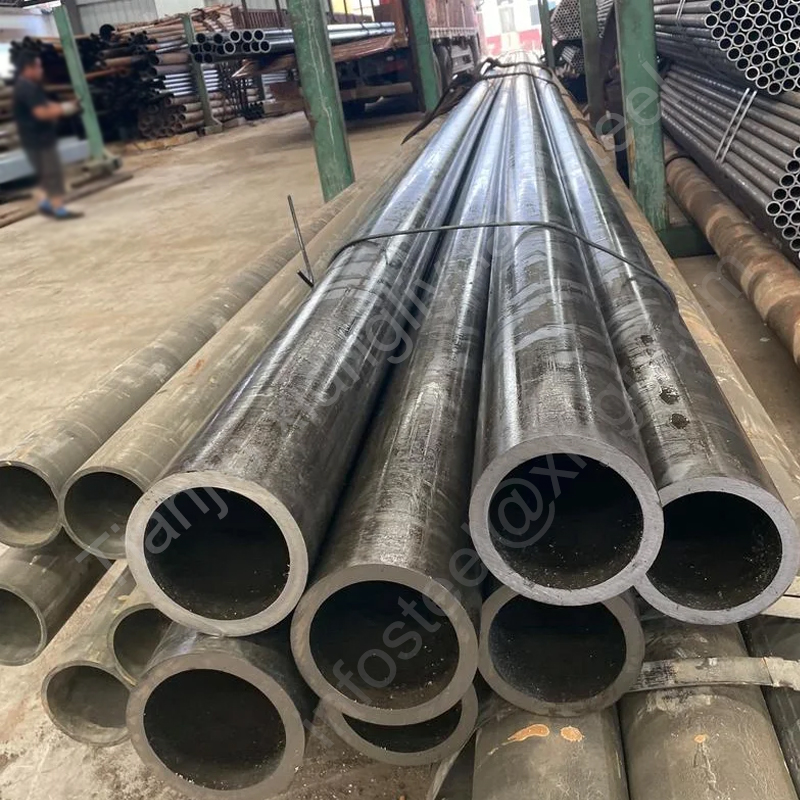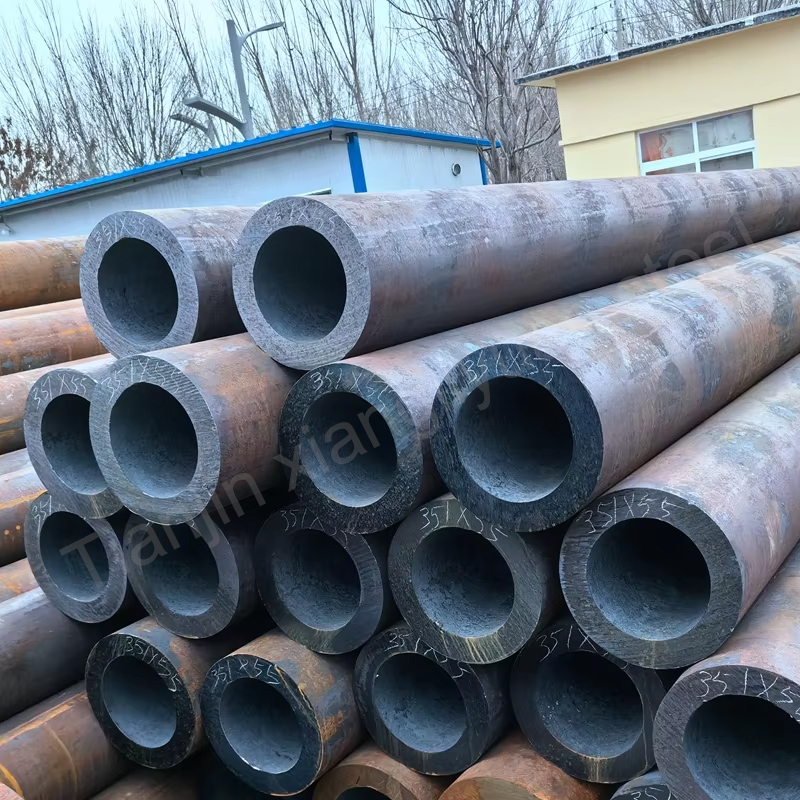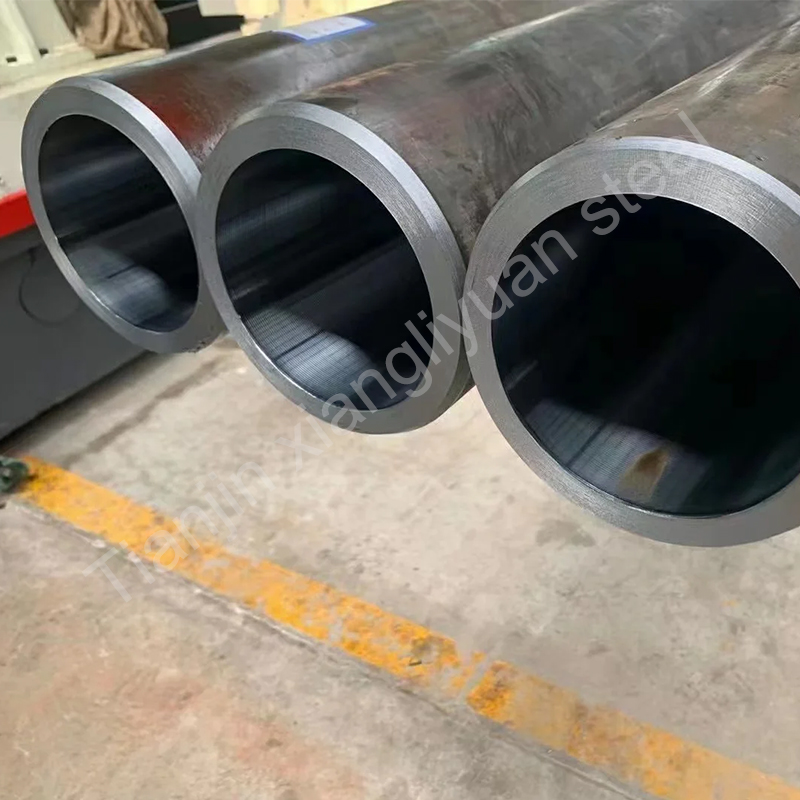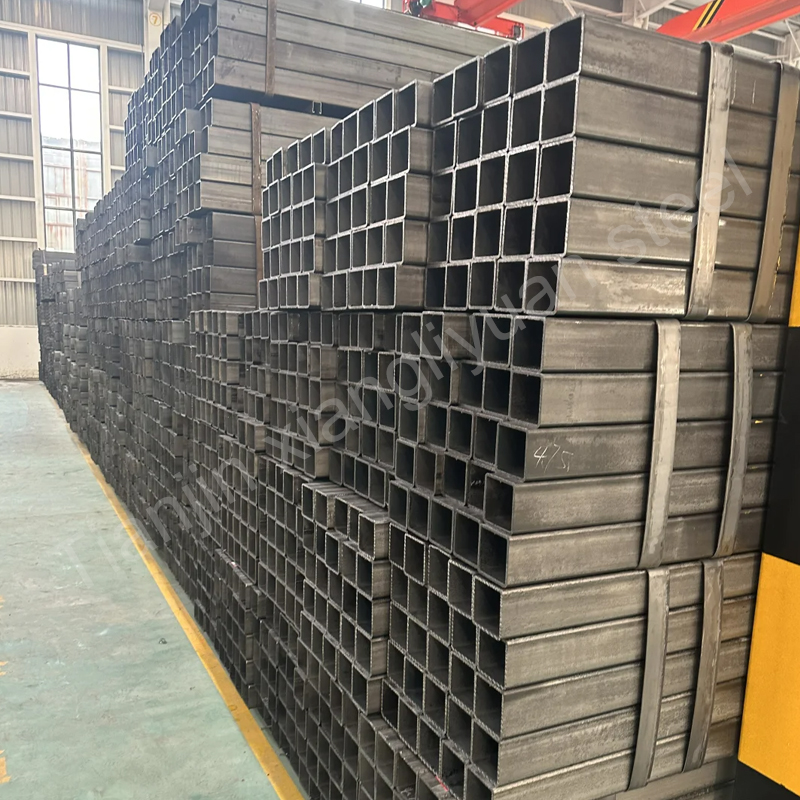
If you work in the oil and gas industry, you’ve encountered API 5L. It’s the specification that governs line pipe—the steel pipes that transport petroleum, natural gas, and water across continents, through deserts, over mountains, and beneath oceans. But within this single specification lies a family of material grades, each with distinct properties, capabilities, and applications.
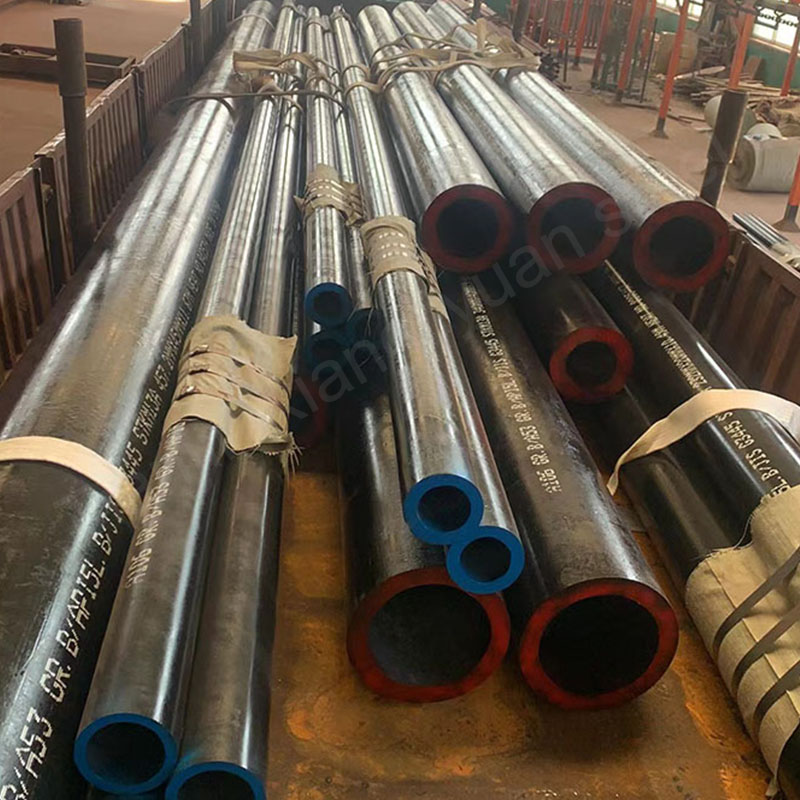
Walking through a pipe yard, you might see pipes stenciled with markings like “API 5L Gr B,” “API 5L X52,” or “API 5L X70.” To the untrained eye, they all look like steel pipes. To an engineer or procurement specialist, those markings tell a story about yield strength, chemical composition, heat treatment, and suitability for different service conditions.
At Tianjin Xiangliyuan Steel, we produce the full spectrum of API 5L line pipes—from the workhorse Grade B to the high-strength X80 and beyond. Our manufacturing lines produce both seamless and welded configurations (including ERW, LSAW, and SSAW), serving clients from major oil companies to pipeline contractors worldwide. This experience has given us deep insight into how these grades perform in real-world applications.
This guide will walk you through the API 5L grade ladder, explaining what the numbers mean, how the grades differ, and which one belongs in your next pipeline project.
For detailed specifications or to discuss your project requirements, visit https://www.xlysteel.com/ or reach out to our technical team at infosteel@xlygt.com.
The API 5L Specification: A Quick Overview
Before diving into individual grades, it’s worth understanding what API 5L actually is.
Published by the American Petroleum Institute, API 5L (officially titled “Specification for Line Pipe”) establishes the standards for seamless and welded steel pipes used in pipeline transportation systems. It covers:
Chemical requirements – allowable percentages of carbon, manganese, phosphorus, sulfur, and other elements
Mechanical properties – minimum yield strength, tensile strength, and elongation
Testing procedures – how pipes must be tested to verify compliance
Marking requirements – what information must appear on each pipe
Delivery conditions – how pipes should be supplied, including heat treatment status
The specification is divided into two product specification levels (PSL): PSL-1 and PSL-2. PSL-2 has more stringent requirements for chemical composition, mechanical properties, and testing, and is typically specified for more critical service conditions.
Now, let’s climb the grade ladder.
Grade B: The Foundation
API 5L Grade B is where it all begins. Often called simply “Grade B,” this is the most basic and widely used grade in the API 5L family.
What Makes Grade B Special?
Grade B has a minimum yield strength of 35,000 psi (241 MPa) and a minimum tensile strength of 60,000 psi (414 MPa) . These numbers might seem modest compared to higher grades, but Grade B’s popularity stems from several factors:
Excellent weldability – The relatively low carbon content makes Grade B easy to weld in field conditions
Good formability – It bends and shapes well during construction
Wide availability – It’s produced in massive quantities globally
Cost-effectiveness – Lower alloy content means lower material cost
Where Grade B Excels
Grade B is the go-to choice for:
Water pipelines – Municipal water systems, irrigation, and raw water transmission
Low-pressure gas gathering – Rural gas distribution networks
General service piping – Within facilities, for air, water, and non-corrosive fluids
Structural applications – Piling, casing for crossings, and support structures
Limitations to Know
Grade B has its limits. It’s not suitable for high-pressure transmission lines, sour service (environments containing hydrogen sulfide), or extreme temperatures. When pressures climb or conditions become aggressive, engineers look to higher grades.
X42: The First Step Up
API 5L X42 represents the entry point into the “X-grade” family. The “42” indicates a minimum yield strength of 42,000 psi (290 MPa) .
X42 was developed to provide additional strength without sacrificing too much of the weldability and formability that made Grade B popular. It achieves its higher strength through slight adjustments in chemistry—typically small additions of manganese and possibly microalloying elements like niobium or vanadium.
Common applications for X42 include:
Medium-pressure gas gathering lines
Water injection lines in oil fields
Some refinery and petrochemical piping
X42 is less common today than in past decades, as X52 and X60 have become more readily available and cost-competitive. However, it remains specified for certain projects, particularly those with existing infrastructure built to X42 standards.
X52: The Industry Workhorse
API 5L X52 with its minimum yield strength of 52,000 psi (359 MPa) has become the standard for many mid-range pipeline applications. It strikes an excellent balance between strength, cost, and weldability.
Metallurgy of X52
X52 achieves its higher strength through a combination of:
Controlled carbon content – Typically 0.16-0.22% depending on the manufacturing process
Manganese additions – Usually 1.10-1.50% to increase strength through solid solution strengthening
Microalloying – Small amounts of niobium, vanadium, or titanium that form fine precipitates and refine grain structure
This chemistry allows X52 to be produced in both seamless and welded forms, with good weldability for field construction.
Where You’ll Find X52
X52 is everywhere in the pipeline world:
Natural gas transmission lines – Regional and cross-country pipelines
Oil trunk lines – Moving crude from gathering areas to refineries
Product pipelines – Transporting refined petroleum products
Water pipelines – Large-diameter water transmission projects
PSL-2 Considerations for X52
When specified as PSL-2, X52 must meet tighter limits on carbon equivalent (CE), which improves weldability, and may require additional testing such as Charpy impact tests for toughness verification. Many modern pipeline projects specify X52 PSL-2 even for relatively moderate conditions, recognizing the value of enhanced quality.
At Tianjin Xiangliyuan Steel, X52 in both PSL-1 and PSL-2 configurations is among our most requested products. We produce it in seamless form for smaller diameters and LSAW or SSAW for larger lines. Visit https://www.xlysteel.com/ to see our X52 production capabilities.
X60: Stepping Up for Higher Pressures
When pressures rise, engineers turn to API 5L X60. With a minimum yield strength of 60,000 psi (414 MPa) , X60 allows thinner walls than X52 for the same pressure, reducing weight and material costs.
The Shift in Metallurgy
X60 represents a threshold where metallurgical approach begins to change:
Lower carbon than older grades to maintain weldability at higher strength
More sophisticated microalloying – Niobium, vanadium, and titanium work together to strengthen through grain refinement and precipitation hardening
Controlled rolling – Thermomechanical processing during plate or strip production enhances properties
These techniques allow X60 to achieve higher strength while maintaining the toughness needed for pipeline service.
Typical X60 Applications
X60 is commonly specified for:
High-pressure gas transmission – Major cross-country pipelines
Offshore pipelines – Where weight savings from thinner walls benefit installation
Arctic and cold-region pipelines – When combined with low-temperature toughness requirements
X60 offers significant advantages over X52 in long-distance pipelines. The weight savings from reduced wall thickness translate directly to lower steel costs, reduced transportation expenses, and faster welding.
X65: The Modern Standard
API 5L X65 (minimum yield strength 65,000 psi / 448 MPa) has become something of a modern standard for major pipeline projects. It represents the sweet spot where strength, toughness, weldability, and cost converge favorably for large-scale developments.
Why X65 Dominates
X65 offers compelling advantages:
Wall thickness reduction – Compared to X52, X65 can reduce required wall thickness by approximately 20% for the same pressure
Excellent toughness – Modern X65, particularly in PSL-2, delivers outstanding low-temperature performance
Good field weldability – Despite higher strength, proper chemistry design maintains weldability
Wide availability – Major pipe mills worldwide produce X65 in volume
The Toughness Factor
One reason X65 has gained such acceptance is its ability to deliver excellent toughness. For pipelines operating in challenging environments—cold climates, offshore, or seismically active regions—toughness (the ability to absorb energy without fracturing) is as important as strength.
X65 PSL-2 with specified Charpy V-Notch (CVN) impact values can provide reliable performance at temperatures down to -40°C or even lower. This combination of strength and toughness makes it suitable for some of the world’s most demanding pipeline projects.
Manufacturing Approaches
X65 can be produced through several routes:
Seamless – For smaller diameters and heavy walls
ERW – For diameters typically up to 24 inches
LSAW – For larger diameters, using plate that has been thermomechanically controlled processed (TMCP)
SSAW – For very large diameters, using TMCP coil
At Tianjin Xiangliyuan Steel, we produce X65 across multiple manufacturing platforms, ensuring we can match the right product to each project’s requirements. Contact infosteel@xlygt.com to discuss your X65 needs.
X70: High Strength for Demanding Service
API 5L X70 pushes minimum yield strength to 70,000 psi (483 MPa) . This is high-strength territory, reserved for pipelines facing extreme conditions or requiring maximum efficiency.
Where X70 Shines
X70 comes into its own for:
High-pressure, long-distance transmission – The strength allows thinner walls, reducing steel tonnage by 25-30% compared to X52
Deepwater pipelines – Where weight reduction is critical for installation
Mountainous or difficult terrain – Lighter pipes are easier to transport and handle
High-throughput systems – Thinner walls mean larger inner diameter for the same outer diameter, increasing flow capacity
Metallurgical Complexity
Achieving 70,000 psi yield strength while maintaining adequate toughness and weldability requires sophisticated metallurgy. X70 typically relies on:
Ultra-low carbon – Often below 0.10% to ensure weldability
Advanced microalloying – Precise combinations of niobium, vanadium, titanium, and sometimes molybdenum
Thermomechanical controlled processing (TMCP) – Carefully controlled rolling temperatures and reduction ratios
Accelerated cooling – Sometimes used to refine microstructure further
This complexity means X70 is almost always produced in modern mills with advanced process control. It also means X70 commands a price premium over lower grades—a premium that must be justified by project economics.
The X70 Challenge
X70 presents some challenges:
Weld procedure qualification – Field welding requires carefully developed and qualified procedures
Handling precautions – The higher strength can make the pipe more susceptible to certain types of damage if not handled properly
Limited availability – Not all mills can produce X70, particularly in certain sizes or wall thicknesses
Despite these challenges, X70 has been successfully used in major projects worldwide, including some of the longest and most challenging pipelines ever constructed.
X80: The Frontier of Standard Grades
API 5L X80 represents the highest strength grade commonly specified in the standard. With a minimum yield strength of 80,000 psi (551 MPa) , X80 pushes the boundaries of what’s achievable with conventional pipeline steels.
The Economics of X80
X80 offers dramatic weight savings—up to 40% less steel than an equivalent X52 pipeline for the same pressure. For a major pipeline moving millions of tons of steel, this translates to enormous cost savings in material, transportation, and construction.
These economics drive X80 adoption for:
Ultra-long-distance transmission lines – Crossing continents, where every ton saved multiplies across thousands of kilometers
High-pressure gas pipelines – Operating at 12 MPa (1,740 psi) or higher
Projects in remote locations – Where transportation costs are extreme
State of the Art
X80 represents the current frontier of high-volume line pipe production. It requires:
Extremely low carbon – Often below 0.06%
Complex microalloying – Niobium, vanadium, titanium, and often molybdenum or nickel
Precise TMCP – Carefully controlled throughout plate or coil production
Stringent quality control – Every step must be right
Not every mill can produce X80 reliably. Those that do—including Tianjin Xiangliyuan Steel—have invested heavily in advanced equipment and process control systems.
Considerations for X80 Use
Specifying X80 requires careful thought:
Design codes – Not all pipeline design codes fully address X80; verification may be needed
Welding – Field welding requires qualified procedures and often preheating
Toughness requirements – X80 for demanding service must meet stringent CVN specifications
Project scale – X80 economics only work for sufficiently large projects
For projects that can justify its use, X80 delivers unmatched efficiency.
Beyond X80: X90, X100, and X120
API 5L also includes specifications for X90, X100, and X120 (minimum yield strengths of 90,000, 100,000, and 120,000 psi respectively). These ultra-high-strength grades exist in the standard but are rarely specified for commercial projects.
They face significant challenges:
Weldability – Field welding becomes extremely difficult
Toughness – Maintaining adequate toughness at such high strength is demanding
Cost – Production costs escalate dramatically
Code acceptance – Many design codes don’t fully address these grades
For now, these grades remain primarily in research and specialized applications. X80 remains the practical upper limit for most commercial pipeline projects.
PSL-1 vs. PSL-2: What’s the Difference?
Throughout this discussion of grades, we’ve mentioned PSL-1 and PSL-2. Understanding the distinction is crucial for proper specification.
PSL-1: The Base Level
PSL-1 covers the fundamental requirements for line pipe. It specifies:
Basic chemical composition limits
Minimum mechanical properties
Standard testing (tensile, flattening, hydrostatic)
Simple marking requirements
PSL-1 is suitable for many applications where conditions are not severe—water pipelines, low-pressure gas gathering, general service.
PSL-2: Enhanced Requirements
PSL-2 adds significant requirements:
Tighter chemistry limits – Maximum carbon and carbon equivalent (CE) values are specified to improve weldability
Maximum yield strength limits – Prevents pipes from being too strong (which can create issues in some designs)
Mandatory toughness requirements – Charpy impact testing is required, with specified minimum values
More stringent nondestructive examination
Enhanced traceability
For critical applications—high-pressure gas transmission, sour service, offshore, Arctic conditions—PSL-2 is typically required.
The Grade/PSL Combination
Any grade from B through X80 can be specified as either PSL-1 or PSL-2, though X70 and X80 are almost always ordered as PSL-2 due to the critical nature of their applications.
Sour Service Grades: The “S” Designation
When pipelines must handle sour gas—natural gas containing hydrogen sulfide (H₂S)—standard grades may fail catastrophically through sulfide stress cracking (SSC). For these environments, API 5L offers “sour service” grades designated with an “S” suffix: X52S, X65S, etc.
What Makes Sour Service Grades Different?
Sour service grades meet additional requirements:
Stricter hardness limits – Maximum hardness is specified to prevent SSC
Tighter chemistry control – Limits on elements that affect SSC resistance
Enhanced testing – May include SSC testing per NACE TM0177 or TM0284
Different acceptance criteria for certain defects
When to Specify Sour Service
If your pipeline will carry:
Wet, sour gas from certain reservoirs
Crude with H₂S content
Any fluid where H₂S may be present
Specify sour service grades and ensure your supplier can provide the necessary documentation and testing.
At Tianjin Xiangliyuan Steel, we produce sour service grades with the required controls and testing. Contact infosteel@xlygt.com for assistance with sour service specifications.
Selecting the Right Grade: A Practical Approach
With so many grades available, how do you choose? Here’s a practical decision framework:
Step 1: Determine Operating Pressure
Higher pressures demand higher strength grades (or thicker walls, which cost more). Calculate the required wall thickness for various grades using the Barlow formula and applicable design code. Compare the steel tonnage for each option.
Step 2: Consider Environmental Conditions
Low temperatures? – Specify Charpy impact testing (PSL-2)
Sour service? – Specify “S” grades with additional controls
Offshore or deepwater? – Higher grades reduce weight, easing installation
Step 3: Evaluate Construction Considerations
Field welding capability – Can your welding contractors handle X70 or X80?
Pipe bending requirements – Higher strength grades are harder to field bend
Valve and fitting availability – Are compatible components available in the required grade?
Step 4: Perform Economic Analysis
Compare total installed cost across grade options, including:
Pipe material cost
Transportation (lighter pipes cost less to ship)
Welding (thinner walls weld faster)
Coating (surface area affects coating cost)
Often, the grade with the lowest pipe cost isn’t the most economical when all factors are considered.
Step 5: Consult the Experts
Pipeline design is complex. Work with experienced engineers and reputable suppliers. At Tianjin Xiangliyuan Steel, our technical team regularly assists clients with grade selection, providing data and guidance based on decades of experience. Visit https://www.xlysteel.com/ to connect with our team.
Quality Assurance Across All Grades
Whatever grade you select, quality assurance is non-negotiable. At Tianjin Xiangliyuan Steel, every API 5L pipe we produce undergoes rigorous testing:
Chemical analysis – Verification that composition meets grade requirements
Tensile testing – Confirmation of yield and tensile strength
Flattening and bend tests – For welded pipes, verifying weld integrity
Hydrostatic testing – Every pipe pressure-tested
Nondestructive examination – Ultrasonic or electromagnetic inspection
Charpy impact testing – When specified (PSL-2 or project requirements)
Drop weight tear testing – For high-grade line pipe when required
All documentation is compiled into comprehensive Mill Test Certificates (MTCs) providing complete traceability.
The Right Grade for Every Job
API 5L offers a remarkable range of material grades because pipelines face an equally remarkable range of conditions. From the modest pressures of a rural water line to the extreme demands of an Arctic gas transmission system, there’s an API 5L grade engineered for the job.
Grade B – The economical choice for general service
X52 – The versatile workhorse for moderate conditions
X60/X65 – The modern standard for major pipelines
X70/X80 – High-strength solutions for demanding applications
Sour service grades – Protection when H₂S is present
Understanding these grades—what they offer, where they excel, and how they differ—is essential knowledge for anyone involved in pipeline projects.
Your Partner in API 5L Line Pipe
At Tianjin Xiangliyuan Steel, we’ve spent decades mastering the full spectrum of API 5L grades. Our manufacturing facilities produce seamless, ERW, LSAW, and SSAW line pipes in grades from B through X80, in both PSL-1 and PSL-2 configurations, with all required testing and certification.
Whether you’re planning a major pipeline project, expanding an existing system, or simply exploring options for future needs, we’re here to help.
Contact our technical team today:
Email: infosteel@xlygt.com
Website: https://www.xlysteel.com/
Let us put our API 5L expertise to work for you. From grade selection through final delivery, we’re committed to your project’s success.