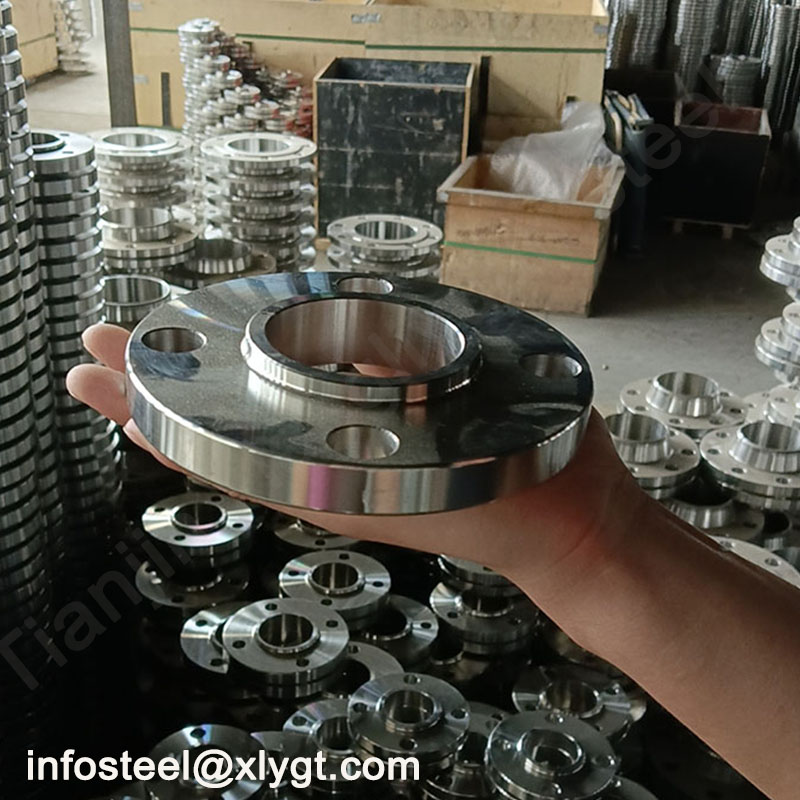
In the intricate network of industrial piping systems, flanges serve as the critical linchpins, enabling the secure, leak-proof, and modular connection of pipes, valves, pumps, and other essential equipment. More than just connectors, flanges are engineered components whose proper selection is paramount to ensuring system integrity, safety, maintenance accessibility, and long-term operational reliability. At Tianjin Xiangliyuan Steel, we recognize that specifying the correct flange is as crucial as selecting the pipe itself. This detailed guide delves into the technical nuances of the primary flange types, empowering you with the knowledge to make informed procurement decisions and highlighting why Tianjin Xiangliyuan Steel is your ideal partner for both high-quality steel pipes and their perfectly matched flanges.
The Core Flange Types – Detailed Technical Breakdown
1. Weld Neck Flange (WN)
Definition & Construction: Characterized by a long, tapered hub that transitions smoothly to the pipe wall, ending in a butt-weld connection. The hub provides essential reinforcement at the point of highest stress—the weld junction.
Standards & Specifications: Commonly manufactured to ASME B16.5 (up to 24″ NPS), ASME B16.47 Series A & B (larger diameters), EN 1092-1, DIN, and JIS standards. Materials range from standard Carbon Steel (ASTM A105) to Stainless (A182 F304/316) and Alloy grades (A182 F11, F22, F91).
Pressure Classes: Excellent performance across all pressure classes, from 150# to 2500#. The tapered hub is particularly effective in distributing stress, making it the preferred choice for high-pressure and high-temperature applications.
Common Sizes: Available from 1/2″ (15mm) NPS upwards, with larger diameters (over 24″) available as “Special Welding Neck” flanges.
Key Characteristics & Advantages:
Superior Stress Distribution: The tapered hub minimizes stress concentration at the weld, offering the highest integrity connection.
Excellent for Severe Service: Ideal for cyclic conditions involving temperature fluctuations, high pressure, or sub-zero temperatures.
Smooth Bore: The smooth internal transition from flange to pipe minimizes turbulence and erosion/corrosion potential.
Primary Applications: Refinery and petrochemical process lines, high-pressure steam lines, hydrocarbon transmission pipelines, and critical service applications in power generation.
Procurement Considerations: When ordering, specify the pipe wall thickness (schedule) to ensure the flange bore is correctly machined for a perfect match. Hub length and facing must align with system specs.
2. Slip-On Flange (SO)
Definition & Construction: This flange has a slightly larger bore than the pipe’s outer diameter, allowing it to “slip over” the pipe. It is secured by fillet welding on both the inside (hub) and outside.
Standards & Specifications: Governed by the same dimensional standards as WN flanges (ASME B16.5, etc.). Common materials include A105, A350 LF2, and A182 stainless steels.
Pressure Classes: Typically used for lower pressure ranges, generally Class 150 and 300. Its strength is about 2/3 that of a comparable Weld Neck flange.
Common Sizes: Widely available from small bore (1/2″) to large diameters.
Key Characteristics & Advantages:
Lower Cost & Easier Alignment: Less initial material cost and easier for initial alignment before welding compared to WN flanges.
Fabrication Efficiency: Suitable for systems with numerous straightforward connections where high cyclic fatigue is not a concern.
Primary Applications: Low-pressure water lines, fire protection systems, process utilities, and general plant piping where cost-effectiveness is key.
Procurement Considerations: Ensure the internal weld is performed correctly to avoid crevice corrosion, especially in stainless steel systems. Not recommended for high bending moment loads.
3. Blind Flange (BL)
Definition & Construction: A solid disk with no bore, used to close off or “blind” the end of a piping system, valve, or vessel nozzle. It features bolt holes matching the connecting flange.
Standards & Specifications: Complies with ASME B16.5 pressure ratings. Material selection must match the connected piping material and service conditions.
Pressure Classes: Available in all pressure classes. Thickness increases significantly with pressure class and size to withstand system pressure.
Common Sizes: Matches all standard pipe sizes and flange ratings.
Key Characteristics & Advantages:
System Isolation & Safety: Allows for easy pressure testing (hydrotest), safe isolation of sections for maintenance, and future system expansion.
High Strength: Can be subjected to significant mechanical stress from system pressure.
Primary Applications: Used at the end of pipe runs, for manways on vessels, and as inspection covers. Essential for pressure testing new or modified lines.
Procurement Considerations: Verify thickness and facing (RF, FF, RTJ) to match the mating flange. A proper gasket is crucial for a leak-tight seal.
4. Socket Weld Flange (SW)
Definition & Construction: Features a counterbore (socket) into which the pipe is inserted. A fillet weld is then made on the hub’s outside. A small gap is left between the pipe end and the socket shoulder to prevent weld cracking during solidification.
Standards & Specifications: Dimensional standards as per ASME B16.5. Common in smaller sizes and for alloy materials.
Pressure Classes: Suitable for high-pressure small-bore piping, typically in classes 150 through 3000.
Common Sizes: Generally used for pipe sizes NPS 2″ and smaller.
Key Characteristics & Advantages:
Excellent Flow Characteristics: Smooth bore and good joint strength.
Good for Fatigue Resistance: Superior to threaded connections in vibrating lines.
Easier Alignment than Butt-Weld: The socket provides natural alignment.
Primary Applications: Instrument lines, sample points, chemical injection lines, and small-bore high-pressure process lines in oil & gas and power plants.
Procurement Considerations: The internal crevice at the pipe/socket junction can be a site for corrosion in certain services. Proper welding technique (gap left) is critical.
5. Threaded Flange (THD)
Definition & Construction: Has a female NPT (National Pipe Taper) thread inside the bore, allowing it to be screwed onto externally threaded pipe without welding.
Standards & Specifications: ASME B16.5 outlines dimensions. Materials are often forged carbon or stainless steel (A105, A182).
Pressure Classes: Used in lower pressure classes (150# and 300# are most common).
Common Sizes: Typically for smaller diameters (up to 4″ NPS, though larger are available).
Key Characteristics & Advantages:
Welding Not Required: Ideal for special alloy systems where welding is difficult, or in explosive atmospheres where hot work is prohibited.
Easy Installation & Modification: Can be easily assembled and disassembled.
Primary Applications: Air/water utilities, firewater lines, fuel oil systems, and connections to threaded equipment. Often used in galvanized piping systems.
Procurement Considerations: Not suitable for high cyclic loading or severe temperature gradients. Seal welding the thread-root is often recommended for leak-proof service. Thread compound/sealant must be compatible with the process fluid.
Beyond the Basics – Key Procurement Factors
Material Selection & Grades: The flange material must be chemically and mechanically compatible with the pipe, the process fluid, and the environment.
Carbon Steel (A105): General purpose, non-corrosive services.
Stainless Steel (A182 F304/316/321): For corrosion resistance and elevated temperatures.
Alloy Steel (A182 F11/F22/F91): For high-temperature strength (e.g., power plant steam lines).
Low-Temp Carbon Steel (A350 LF2): For services below -29°C to prevent brittle fracture.
Pressure-Temperature Ratings: The flange’s class (150#, 300#, etc.) defines its maximum allowable pressure at a given temperature. Always consult the ASME B16.5 pressure-temperature rating tables. Tianjin Xiangliyuan Steel provides complete P-T rating documentation with all flange shipments.
Facing Types: The sealing surface finish is critical for gasket performance.
Raised Face (RF): Most common. A raised ring contacts the gasket.
Flat Face (FF): Entire face contacts the gasket, used with FF mating surfaces (e.g., cast iron equipment).
Ring-Type Joint (RTJ): Features a groove for a metal ring gasket, used for high-pressure/temperature services (Classes 600# and above).
Tongue-and-Groove (T&G), Male-and-Female (M&F): Provide self-alignment and contain the gasket, often used in pump and valve covers.
Manufacturing & Quality Assurance: At Tianjin Xiangliyuan Steel, our flanges are produced through precision forging or plate cutting/machining, followed by rigorous QA:
Material Certification: Full traceability to mill test reports (MTRs) with chemical and mechanical analysis.
Dimensional Verification: 100% checked against ASME/ANSI standards.
Non-Destructive Testing (NDT): Magnetic Particle Inspection (MPI) or Dye Penetrant Inspection (DPI) on all critical surfaces to detect surface flaws.
Surface Finish: RF faces are serrated to specified roughness (125-250 AARH) for optimal gasket bite.
Marking: Each flange is permanently marked with material grade, pressure class, size, standard, heat number, and our manufacturer’s logo for complete traceability.
Your Strategic Partner for Flanged Connections
Selecting the appropriate flange is a calculated engineering decision that directly impacts the safety, longevity, and performance of your piping investment. It requires a deep understanding of service conditions, material science, and international standards.
Tianjin Xiangliyuan Steel offers more than just compliant products; we provide engineered solutions. Our extensive inventory encompasses the full spectrum of standard flange types, materials, and sizes, ready for dispatch. Furthermore, our technical team possesses the expertise to guide you through the selection process, ensuring compatibility and optimizing for both performance and cost.
We invite you to consolidate your piping component supply chain. By sourcing your steel pipes and precision-matched flanges from a single, reliable manufacturer—Tianjin Xiangliyuan Steel—you gain unmatched consistency in quality, streamlined logistics, and single-point accountability.
For detailed technical datasheets, pressure-temperature charts, material certifications, or to discuss your specific flange requirements, please do not hesitate to contact our expert engineering and sales team at infosteel@xlygt.com. Let us demonstrate how our commitment to precision manufacturing and technical support can contribute to the success of your next project.