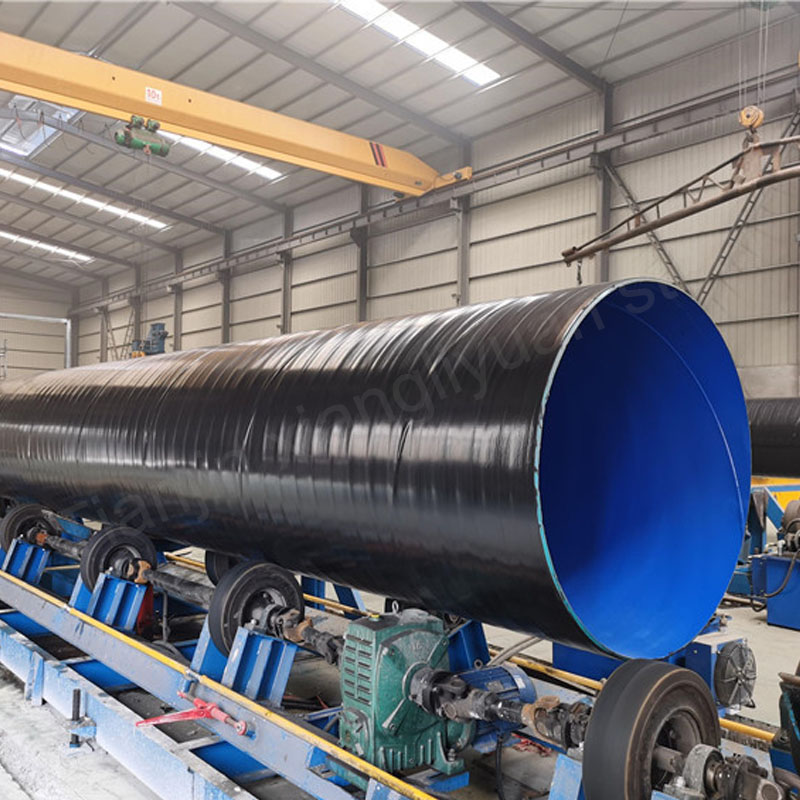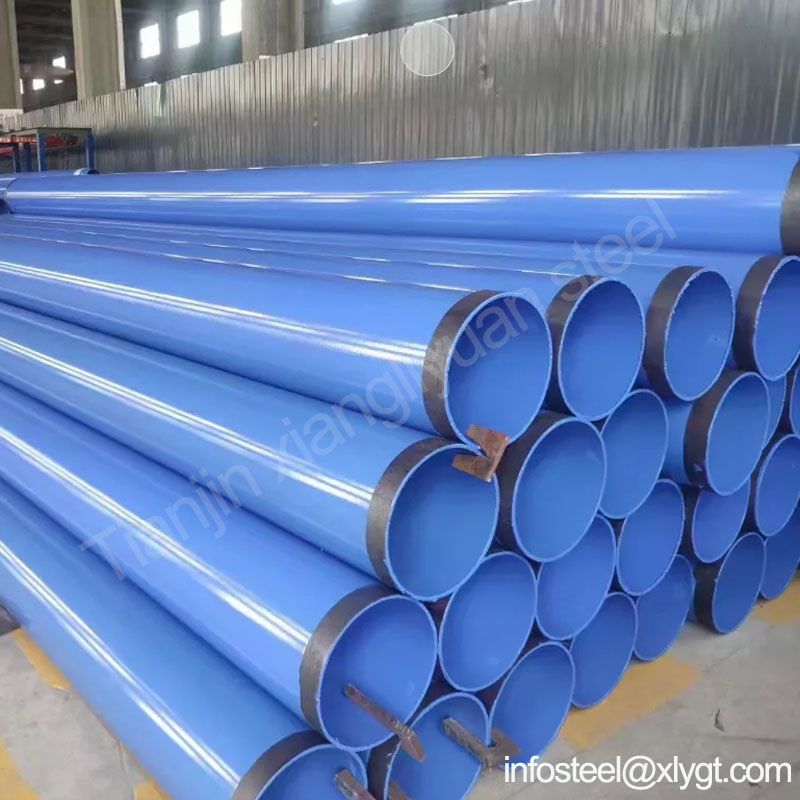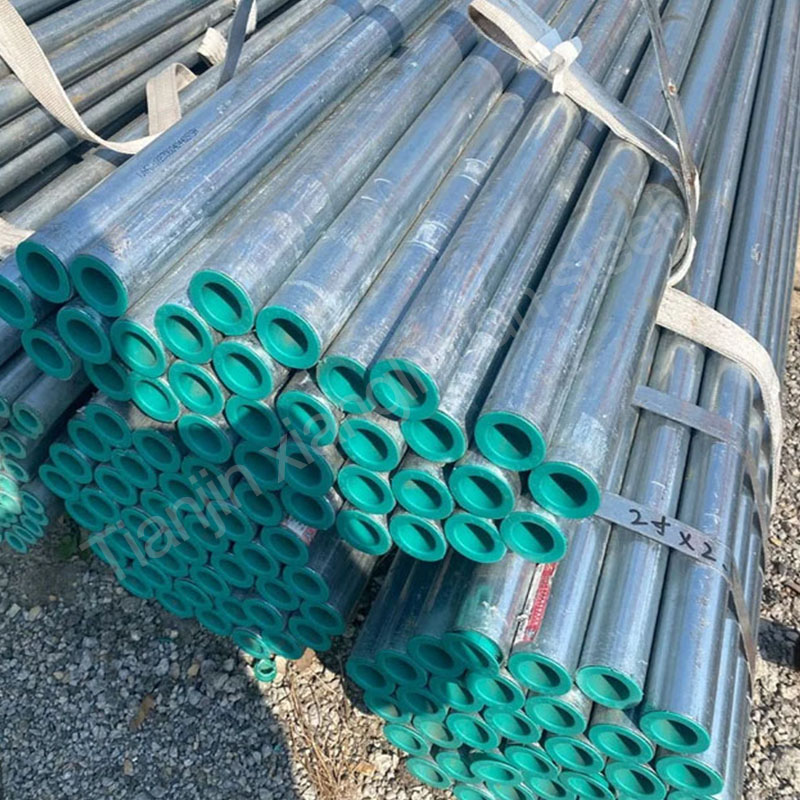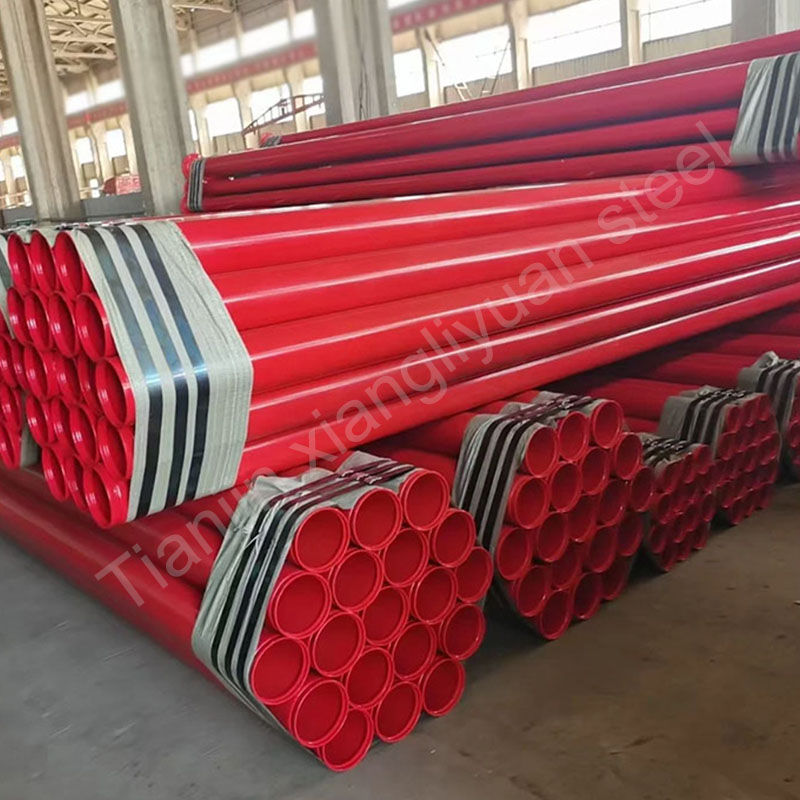
Steel pipes remain the backbone of critical infrastructure across oil and gas transmission, petrochemical processing, power generation, and structural engineering applications. As global demand for seamless steel pipe, ERW steel pipe, and precision steel tubing continues to rise, ensuring surface integrity has become paramount for manufacturers and end-users alike. At Tianjin Xiangliyuan Steel (https://www.xlysteel.com/), we understand that surface defects—whether originating from manufacturing processes or in-service degradation—can compromise the structural integrity of ASTM A106, API 5L, and ASME SA-53 grade materials.
Non-destructive testing (NDT) represents the cornerstone of quality assurance in steel pipe manufacturing. Among the spectrum of available techniques, ultrasonic testing (UT) and eddy current testing (ET) have emerged as the predominant methodologies for surface and near-surface defect detection. This comprehensive technical analysis examines the fundamental principles, capabilities, limitations, and optimal applications of these two critical inspection technologies, reflecting the expertise that Tianjian Xiangliyuan Steel brings to every seamless steel pipe and welded steel pipe order we fulfill.
Fundamental Principles of Ultrasonic Testing (UT)
Ultrasonic testing operates on the principle of high-frequency mechanical wave propagation through elastic media. In steel pipe inspection, piezoelectric transducers generate acoustic pulses typically ranging from 0.5 MHz to 25 MHz, depending on material thickness and required resolution. When these longitudinal or shear waves encounter acoustic impedance discontinuities—such as cracks, laminations, inclusions, or wall thickness variations—partial reflection occurs, with the returning echoes analyzed to characterize defect geometry and location.
UT Methodologies for Steel Pipe Applications
Pulse-Echo Technique: The most widely implemented approach for thick-walled seamless steel pipe inspection, particularly for boiler tubes, heat exchanger tubing, and high-pressure pipeline applications. This method provides quantitative depth information essential for remaining life assessment calculations.
Immersion Testing: Preferred for automated inspection of longitudinal welded pipe and spiral welded pipe, where complete circumferential coverage is required. Water-coupled immersion systems eliminate air gaps that cause signal attenuation, ensuring consistent coupling for ASTM A53 Grade B and API 5L X52 through X80 grade materials.
Phased Array Ultrasonic Testing (PAUT): An advanced evolution utilizing electronically controlled beam steering and focusing. PAUT enables comprehensive volumetric inspection of complex geometries including pipe fittings, flanges, and weld seams in sour service environments where hydrogen-induced cracking (HIC) and sulfide stress cracking (SSC) are concerns.
Time-of-Flight Diffraction (TOFD): Highly sensitive to planar defects perpendicular to the surface, TOFD has become the preferred method for automated weld inspection in offshore pipeline construction and nuclear power plant applications requiring compliance with ASME Section V and API 1104 standards.
Technical Advantages of UT in Steel Pipe Manufacturing
The penetration capability of ultrasonic waves makes UT uniquely suited for thick-wall carbon steel pipe, alloy steel pipe, and stainless steel pipe inspection. For heavy-wall seamless tubing used in high-pressure boiler applications (ASTM A192, ASTM A210), UT can reliably detect internal defects at depths exceeding 200mm. The technique provides precise thickness measurements for corrosion monitoring in API 5CT oil country tubular goods (OCTG) and offers superior sensitivity to planar defects such as laminations and hydrogen flakes.
At Tianjin Xiangliyuan Steel, our UT inspection protocols comply with ASTM E213, ASTM E273, and EN 10246 standards, ensuring that every seamless carbon steel pipe and alloy steel boiler tube meets the stringent requirements of international pressure vessel codes. Our proximity to Tianjin Port facilitates rapid delivery of UT-certified steel pipe to clients across Southeast Asia, the Middle East, and European markets.
Fundamental Principles of Eddy Current Testing (ET)
Eddy current testing exploits electromagnetic induction phenomena discovered by Faraday in 1831. When an alternating current flows through a coil positioned near a conductive steel pipe surface, a primary magnetic field induces circulating eddy currents within the material. Discontinuities such as cracks, pits, or material property variations alter the eddy current flow patterns, changing the coil’s impedance which is measured and correlated to defect characteristics.
ET Configurations for Steel Pipe Inspection
Conventional Eddy Current: Utilizing absolute or differential probe configurations, conventional ET excels in detecting surface-breaking cracks and material sorting. For ferromagnetic steel pipe applications, magnetic saturation is required to overcome permeability variations that would otherwise mask defect signals.
Remote Field Testing (RFT): Specifically developed for ferromagnetic tube inspection, RFT employs exciter and detector coils separated by approximately two pipe diameters. This technique penetrates the full wall thickness of carbon steel heat exchanger tubes and boiler tubing, detecting internal and external defects with nearly equal sensitivity.
Eddy Current Array (ECA): Modern ECA technology replaces single-coil probes with electronically multiplexed arrays, providing C-scan imaging capabilities similar to ultrasonic phased arrays. This advancement enables rapid inspection of weld seams in longitudinal welded steel pipe and spiral submerged arc welded (SSAW) pipe.
Pulsed Eddy Current (PEC): Capable of inspecting through insulation and coatings, PEC has gained traction for corrosion under insulation (CUI) detection in petrochemical piping systems and offshore platform riser inspections.
Technical Advantages of ET in Steel Pipe Applications
Eddy current testing offers exceptional inspection speeds—often exceeding several meters per second—making it ideal for high-volume production environments. The technique requires no couplant, eliminating the water management challenges associated with UT immersion systems. ET demonstrates particular sensitivity to surface-breaking cracks, including stress corrosion cracking (SCC) and fatigue cracks in cyclic service applications.
For non-ferromagnetic materials such as stainless steel pipe (ASTM A312, ASTM A269) and duplex stainless steel pipe (ASTM A790), ET provides superior signal-to-noise ratios without magnetic saturation requirements. The method’s ability to detect gradual wall loss makes it valuable for corrosion monitoring in heat exchanger tube bundles and condenser tubing.
Comparative Technical Analysis
Defect Detection Capabilities
Surface Crack Detection: Both UT and ET demonstrate high sensitivity to surface-breaking cracks when properly implemented. ET typically achieves better detection of tight, shallow cracks (depth <1mm) in carbon steel pipe surfaces, while UT surface wave techniques (Rayleigh waves) excel at detecting cracks oriented perpendicular to the surface in welded steel pipe seam inspections.
Subsurface Defect Characterization: UT maintains decisive superiority for subsurface defect detection, with shear wave techniques capable of identifying planar defects at depths up to several centimeters. ET’s penetration depth follows the skin effect principle (δ = √(2/ωμσ)), limiting reliable detection to approximately 1-3mm in carbon steel at conventional test frequencies.
Wall Thickness Measurement: UT provides absolute thickness measurements with uncertainties typically below ±0.1mm, essential for corrosion assessment in API 5L pipeline steel and ASTM A106 pressure piping. ET thickness measurement requires calibration standards and is generally less accurate for absolute measurements, though excellent for comparative trending.
Material Considerations
Ferromagnetic Steel Pipe: Carbon steel pipe, low-alloy steel pipe, and martensitic stainless steel pipe present unique challenges for ET due to magnetic permeability variations. Magnetic saturation or remote field techniques are mandatory, adding complexity to the inspection setup. UT remains largely unaffected by magnetic properties, providing consistent performance across ferritic, austenitic, and duplex microstructures.
Austenitic Stainless Steel Pipe: The coarse-grained, anisotropic structure of austenitic stainless steel (TP304, TP316, TP321) causes significant ultrasonic scattering and beam skewing. ET offers superior performance for thin-wall austenitic tubing inspection, particularly for heat exchanger and instrumentation applications.
Coated and Lined Pipe: Both techniques accommodate inspection through thin coatings, though UT requires correction for coating thickness effects on velocity calculations. ET demonstrates advantages for inspecting through conductive metallic coatings and liners.
Inspection Speed and Automation
Modern automated ET systems achieve inspection speeds of 1-3 m/s for seamless steel pipe production lines, significantly exceeding UT throughput for equivalent coverage. This efficiency makes ET the preferred choice for 100% inspection of high-volume products such as automotive steel tubing, precision mechanical tubing, and standard boiler tubes.
UT automation has advanced considerably with phased array technology, though inspection speeds typically remain below 0.5 m/s for comprehensive volumetric coverage. The technique remains indispensable for critical applications requiring full wall thickness examination, including high-pressure hydraulic tubing, nuclear fuel channel tubing, and sour service pipeline pipe.
Industry Standards and Quality Assurance
Compliance with international standards ensures the reliability of NDT results across global supply chains. Tianjin Xiangliyuan Steel maintains accreditation to ISO 9001:2015 quality management systems and implements inspection procedures conforming to:
ASTM E213: Standard Practice for Ultrasonic Testing of Metal Pipe and Tubing
ASTM E309: Standard Practice for Eddy-Current Examination of Steel Tubular Products Using Magnetic Saturation
ASTM E570: Standard Practice for Flux Leakage Examination of Ferromagnetic Steel Tubular Products
API 5CT/5L: Specification for Casing and Tubing / Line Pipe
EN 10246: Non-Destructive Testing of Steel Tubes
ASME Section V: Boiler and Pressure Vessel Code, Nondestructive Examination
Our laboratory maintains certified reference standards with artificial defects (EDM notches, drilled holes) traceable to national metrology institutes, ensuring calibration integrity for both UT and ET systems.
Application-Specific Recommendations
Oil and Gas Pipeline Applications
For API 5L Grade B through X80 line pipe used in oil transmission pipelines and natural gas distribution systems, automated ultrasonic testing (AUT) of longitudinal seam welds has become the industry standard. PAUT systems provide complete volumetric coverage of weld zones, detecting lack of fusion, incomplete penetration, and cracks in both the weld metal and heat-affected zone. ET serves as an effective screening tool for detecting longitudinal surface cracks in the pipe body during high-speed production.
Boiler and Heat Exchanger Tubing
ASTM A179, A192, and A210 carbon steel boiler tubes typically undergo 100% ET inspection for surface defects, with UT reserved for wall thickness verification and lamination detection in critical applications. For ASTM A213 T11, T22, T91 alloy steel superheater tubes, ET combined with ultrasonic thickness measurement ensures compliance with ASME Boiler and Pressure Vessel Code requirements.
Structural and Mechanical Tubing
ASTM A500 structural tubing and ASTM A513 mechanical tubing benefit from ET inspection for surface quality assurance during high-speed production. For thick-wall hydraulic cylinder tubing requiring internal surface integrity, UT immersion testing provides comprehensive defect detection.
Precision Instrumentation Tubing
ASTM A269 seamless stainless steel tubing for instrumentation applications demands exceptional surface quality. ET with rotating probe systems achieves the sensitivity required for detecting micro-pits and inclusions that could compromise system reliability in chemical processing and semiconductor manufacturing environments.
Tianjin Xiangliyuan Steel: Your Partner in Quality Steel Pipe Solutions
Located in Tianjin, China’s premier steel manufacturing hub with direct access to Tianjin Port—one of the world’s busiest container terminals—Tianjin Xiangliyuan Steel combines technical expertise with logistical advantages that translate to competitive lead times and reduced shipping costs for our global clientele.
Our comprehensive steel pipe product portfolio includes:
Seamless Steel Pipe: ASTM A106 Grade B/C, ASTM A53 Grade B, API 5L Grade B/X42/X52/X60/X65/X70, ASTM A333 Grade 6 for low-temperature service
ERW Steel Pipe: ASTM A53, API 5L, ASTM A500, EN 10219 structural hollow sections
Alloy Steel Pipe: ASTM A335 P5, P9, P11, P22, P91 for high-temperature service
Stainless Steel Pipe: ASTM A312 TP304/304L, TP316/316L, TP321, TP347, ASTM A790 duplex and super duplex
Specialized Tubing: Heat exchanger tubes, boiler tubes, precision mechanical tubing, hydraulic tubing
Our quality management system integrates state-of-the-art UT and ET inspection capabilities, ensuring that every heat of steel pipe meets or exceeds applicable material specifications. Whether your application requires NACE MR0175/ISO 15156 compliance for sour service, impact testing for low-temperature applications, or specialized hydrostatic testing protocols, our technical team provides the engineering support necessary for project success.
For technical consultations, material certifications, or quotation requests, please contact our international sales team at infosteel@xlygt.com. Visit our comprehensive product catalog and technical resources at https://www.xlysteel.com/ to explore our full range of carbon steel pipe, alloy steel pipe, and stainless steel pipe solutions.
The selection between ultrasonic testing and eddy current testing for steel pipe surface inspection requires careful consideration of material properties, defect types, inspection speed requirements, and regulatory compliance obligations. While UT provides superior penetration and volumetric examination capabilities essential for thick-wall pressure-containing applications, ET offers unmatched speed and sensitivity for surface-breaking defect detection in high-volume production environments.
Modern steel pipe manufacturing increasingly employs complementary NDT strategies, leveraging the strengths of both technologies to achieve comprehensive quality assurance. At Tianjin Xiangliyuan Steel, our commitment to technical excellence ensures that whether your project requires API 5L pipeline pipe for energy infrastructure, ASTM A312 stainless steel pipe for chemical processing, or precision mechanical tubing for automotive applications, you receive products inspected to the highest international standards.
Our strategic location near Tianjin Port, combined with rigorous NDT protocols and comprehensive material traceability, positions Tianjin Xiangliyuan Steel as your preferred partner for seamless steel pipe, welded steel pipe, and specialty tubing requirements worldwide. Contact us today at infosteel@xlygt.com to discuss how our technical capabilities can support your next project.