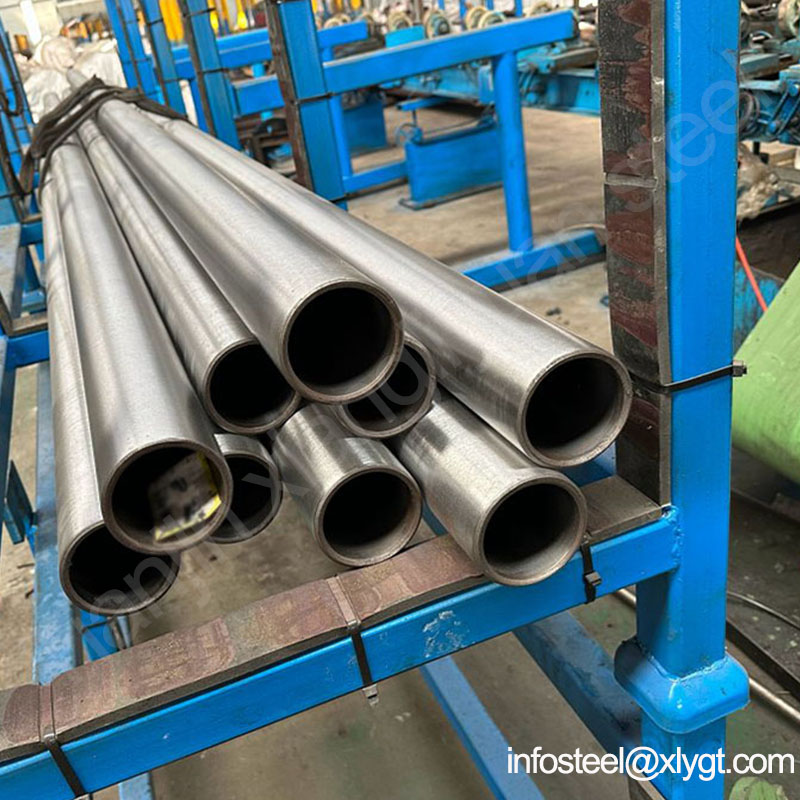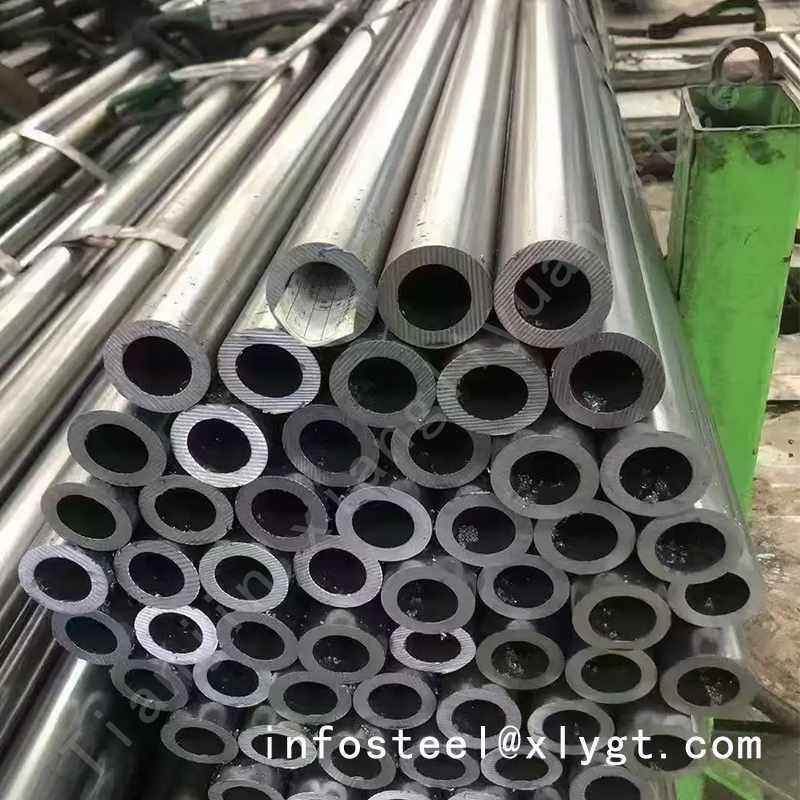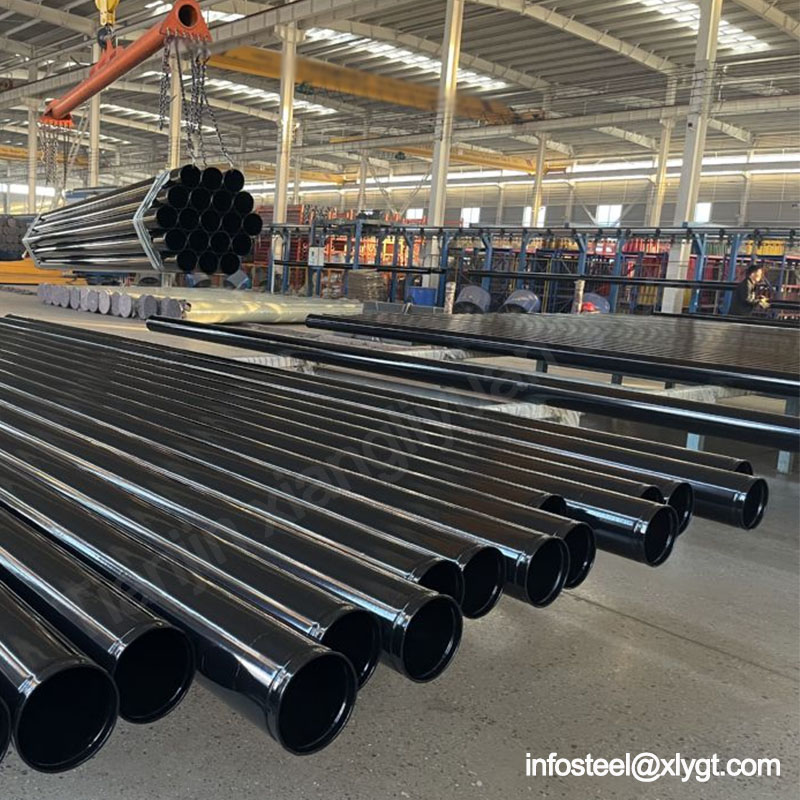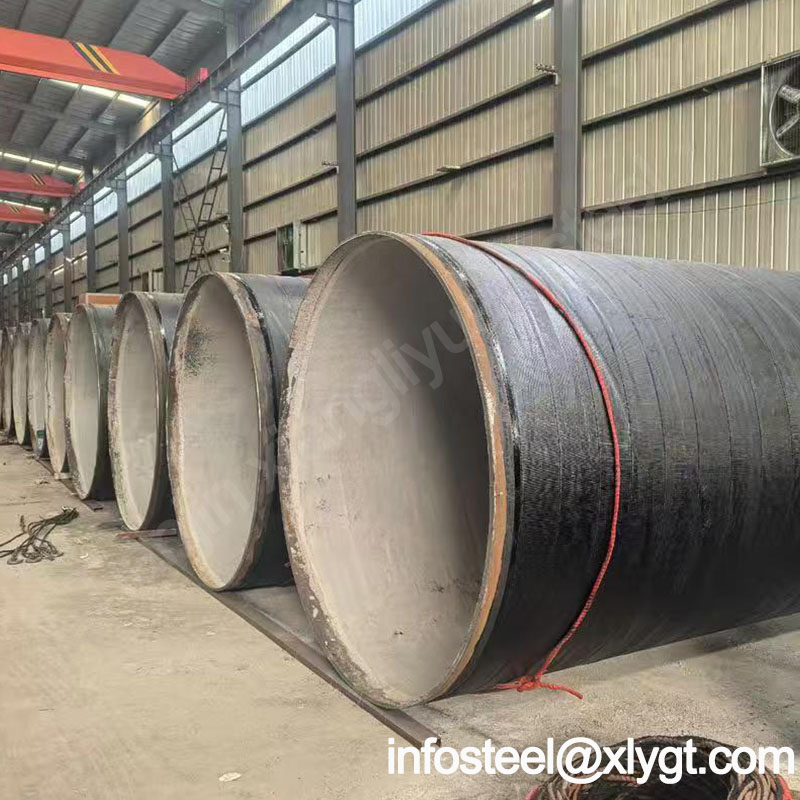
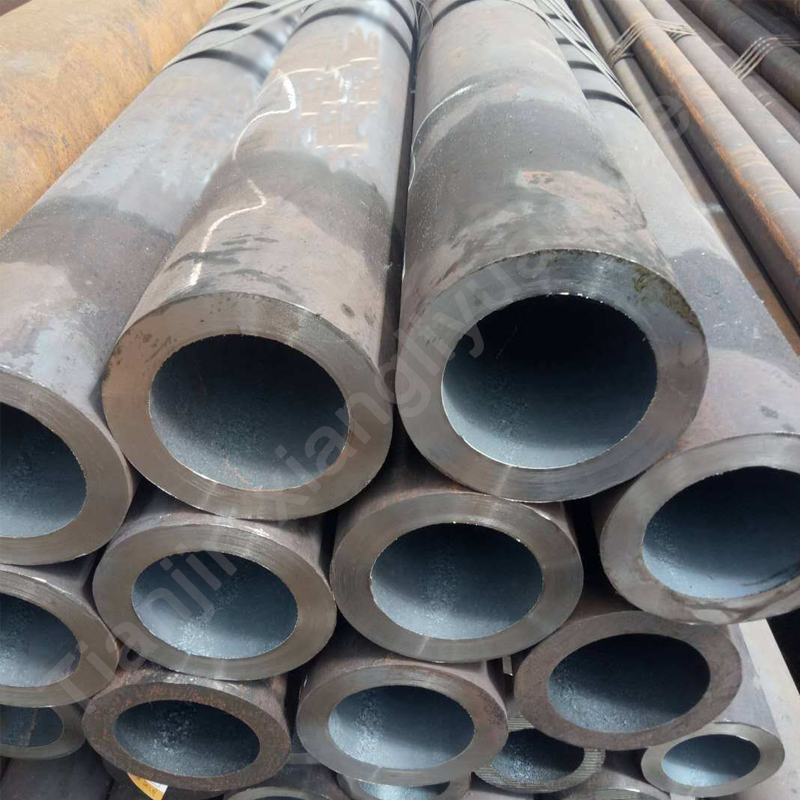
As a premier Chinese manufacturer at the forefront of advanced metallurgy and pipe production, we are committed to delivering solutions that meet the extreme challenges of modern industry. Among our most technologically advanced products is the T91 alloy steel pipe, a material engineered to redefine performance limits in high-temperature and high-pressure environments. This comprehensive guide explores the T91 grade, detailing its properties, manufacturing, applications, and the distinct advantages of sourcing from our facility.
1. Introduction to T91 / P91 Steel: A Metallurgical Breakthrough
T91 (Tube designation per ASTM A213) / P91 (Pipe designation per ASTM A335) represents a significant evolution in 9% chromium ferritic-martensitic steels. Developed in the late 20th century, it builds upon the foundation of Grade 9 (9Cr-1Mo-V) by adding precise micro-alloying elements like vanadium (V), niobium (Nb), and nitrogen (N). This sophisticated chemical design transforms it into a high-strength, creep-resistant alloy capable of operating at temperatures up to 650°C (1200°F), significantly higher than traditional low-alloy steels.
Its primary standards include:
ASTM A213 T91: For seamless ferritic and austenitic alloy-steel boiler, superheater, and heat-exchanger tubes.
ASTM A335 P91: For seamless ferritic alloy-steel pipe for high-temperature service.
Equivalent Grades: EN 10216-2 P911, ASME SA213 T91, SA335 P91.
2. Chemical Composition and Enhanced Metallurgy
The superior performance of T91 stems from its meticulously balanced chemistry:
Typical Chemical Composition (% by weight):
Carbon (C): 0.08 – 0.12
Manganese (Mn): 0.30 – 0.60
Silicon (Si): 0.20 – 0.50
Chromium (Cr): 8.00 – 9.50
Molybdenum (Mo): 0.85 – 1.05
Vanadium (V): 0.18 – 0.25
Niobium (Nb): 0.06 – 0.10
Nitrogen (N): 0.030 – 0.070
Nickel (Ni): ≤ 0.40
Aluminum (Al): ≤ 0.02
Phosphorus (P): ≤ 0.020
Sulfur (S): ≤ 0.010
Metallurgical Advantage: The synergy of Cr-Mo provides oxidation and corrosion resistance. The key enhancement comes from V, Nb, and N, which form stable carbonitrides (e.g., V(C,N), Nb(C,N)). These fine precipitates create a powerful dispersion-strengthening effect, pinning dislocations and grain boundaries. This dramatically improves long-term creep strength, reduces thermal fatigue, and minimizes undesirable microstructural changes like sigma-phase embrittlement during prolonged high-temperature exposure.
3. Mechanical and Physical Properties
T91 exhibits an optimal combination of strength, toughness, and thermal properties.
Room Temperature Mechanical Properties (Normalized & Tempered):
Tensile Strength: ≥ 585 MPa (85,000 psi)
Yield Strength (0.2% Offset): ≥ 415 MPa (60,000 psi)
Elongation (% in 2″ or 50mm): ≥ 20%
Hardness: ≤ 250 HB (Brinell)
Elevated Temperature Performance:
Exceptional Creep Strength: Maintains structural integrity under constant stress at temperatures above 550°C, a critical factor for superheater and reheater tubes.
Good Thermal Conductivity & Lower Thermal Expansion: Compared to austenitic stainless steels (e.g., 304H), T91 has higher thermal conductivity and a lower coefficient of thermal expansion. This reduces thermal stresses during start-up/shutdown cycles, enhancing component life.
Oxidation Resistance: Forms a stable, adherent chromium oxide (Cr₂O₃) scale, protecting the base metal from further degradation in steam and flue gas atmospheres.
4. Our Manufacturing Process and Quality Assurance
Our production of T91 pipes adheres to the strictest protocols, ensuring every meter meets global excellence benchmarks.
Advanced Steelmaking: The process begins with Electric Arc Furnace (EAF) or basic oxygen furnace melting, followed by secondary refining (e.g., Ladle Furnace, Vacuum Degassing) for precise chemistry control and ultra-low sulfur/phosphorus levels.
Seamless Pipe Manufacturing: We primarily produce T91 via the hot extrusion or plug mill process from round billets. This seamless method guarantees homogeneity and is essential for high-pressure integrity.
Critical Heat Treatment: This is the cornerstone of T91’s properties. We perform:
Normalizing: Heating to 1040-1080°C (1904-1976°F) to form a uniform austenitic structure, followed by air cooling to create a martensitic microstructure.
Tempering: Reheating to 730-800°C (1346-1472°F) for a specified time, then air cooling. This relieves stresses, improves ductility and toughness, and allows the precipitation of strengthening carbides.
Comprehensive Testing & Inspection:
Non-Destructive Testing (NDT): 100% ultrasonic testing (UT) for longitudinal defects, eddy current testing (ET), or hydrostatic testing.
Destructive Testing: Tensile, impact (Charpy V-notch), flattening, flaring, and hardness tests on samples from each heat and pipe end.
Metallographic Examination: Verification of grain size and microstructure.
Certification: Every shipment is accompanied by a Mill Test Certificate (MTC) compliant with EN 10204 3.1/3.2 or equivalent, providing full traceability.
5. Key Applications of T91 Pipes and Tubes
T91 is the material of choice for critical components in power generation and other high-energy industries:
Ultra-Supercritical (USC) and Supercritical Power Plants: Primary application in superheater and reheater tubes, main steam lines, and header systems where steam temperatures exceed 580°C.
Heat Recovery Steam Generators (HRSGs): High-pressure evaporator and superheater sections.
Petrochemical Industry: Furnace tubes, transfer lines, and piping in cracking units exposed to high temperatures.
Advanced Thermal Systems: In processes requiring reliable performance under cyclic thermal loads.
6. Advantages of Choosing Our T91 Pipes
Proven Performance: Our pipes deliver the documented high-temperature strength and longevity that engineers rely on for critical infrastructure.
Cost Efficiency: Offers a superior performance-to-cost ratio compared to austenitic stainless steels, providing high strength with lower material and fabrication costs (due to better thermal properties).
Manufacturing Expertise: We possess deep experience in handling the precise thermal cycles required for T91, ensuring consistent, specification-perfect products.
Full Compliance: Guaranteed adherence to ASTM, ASME, EN, and other international standards.
Technical Partnership: We provide comprehensive support, including welding procedure recommendations (WPS/PQR) and application engineering guidance.
7. Fabrication and Welding Guidelines
Successful installation of T91 requires specific welding and handling procedures:
Preheating: Mandatory. Typically 200-250°C (392-482°F) to prevent hydrogen-induced cold cracking.
Welding Consumables: Must use matching chemistry filler metals (e.g., ER90S-B9 for TIG, E9015-B9 for SMAW). Strict control of hydrogen levels in electrodes is crucial.
Interpass Temperature: Must be controlled and not exceed 300°C (572°F).
Post-Weld Heat Treatment (PWHT): Essential. Must be performed at 730-780°C (1346-1436°F) for a minimum of one hour per inch of thickness. This tempers the weld metal and Heat-Affected Zone (HAZ), restoring toughness and creep strength.
8. Comparison with Other Grades
vs. P22 (2.25Cr-1Mo): T91 offers vastly superior high-temperature strength, allowing for thinner wall designs (weight savings) or higher operating parameters.
vs. P92/P91 Modified (9Cr-2W): P92 offers slightly higher creep strength, but T91 remains a highly cost-effective and proven solution for a wide range of USC applications.
vs. Austenitic 304H/347H: T91 has better thermal fatigue resistance, higher thermal conductivity, lower expansion coefficient, and is generally more economical.
T91 alloy steel pipe is a cornerstone material for advancing thermal efficiency and reliability in power generation and beyond. Its sophisticated metallurgy delivers unmatched performance under stress at extreme temperatures. As a trusted Chinese manufacturer–Tianjin xiangliyuan steel, we combine world-class material science with rigorous manufacturing and quality control to supply T91 pipes that power the world’s most demanding facilities.
Partner with us for your next project. Contact our sales and engineering team today for quotations, detailed technical data, or to discuss your specific requirements.