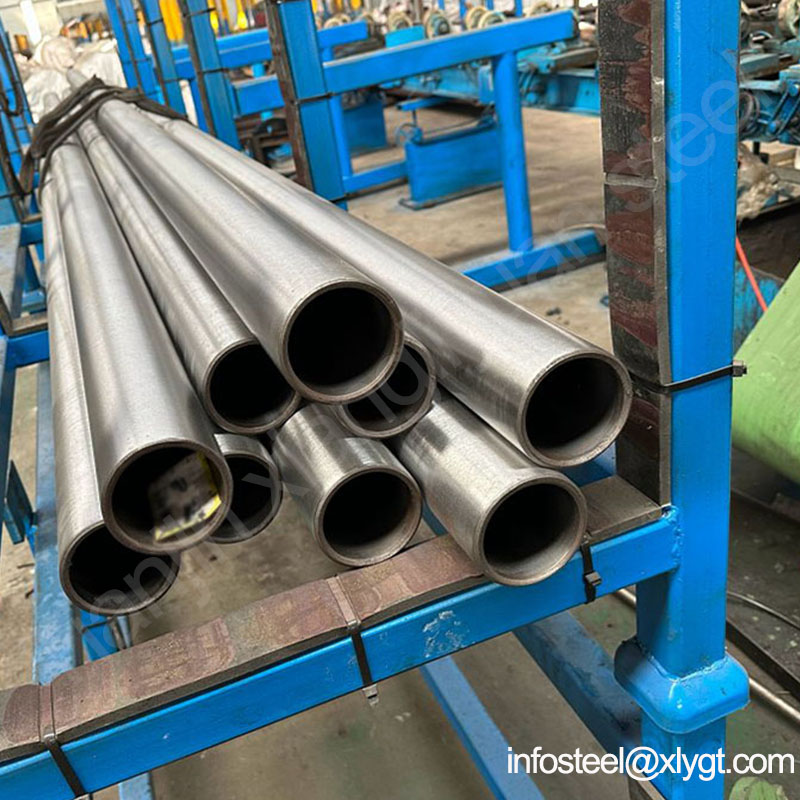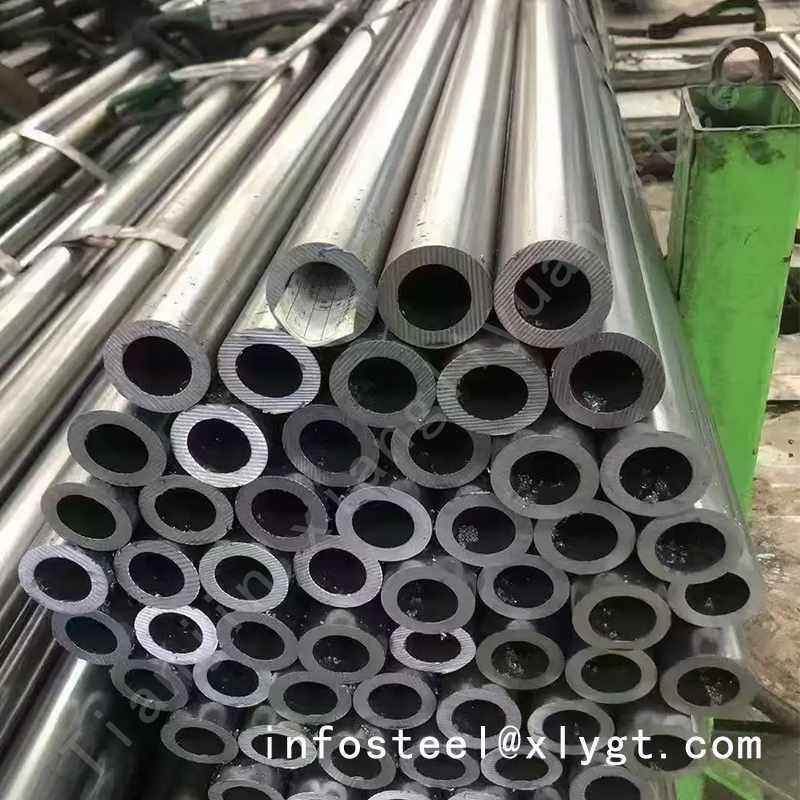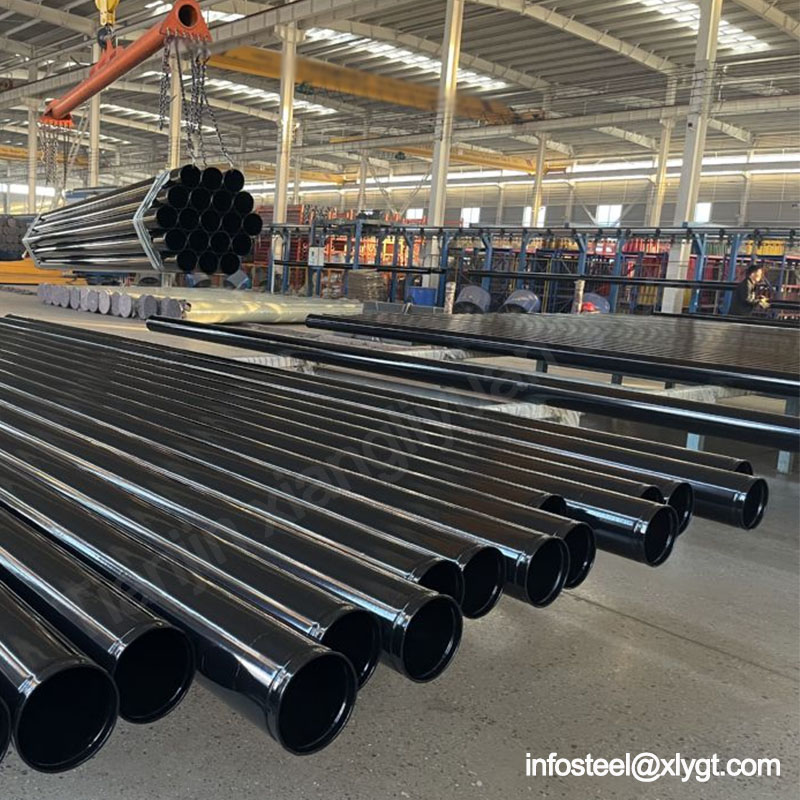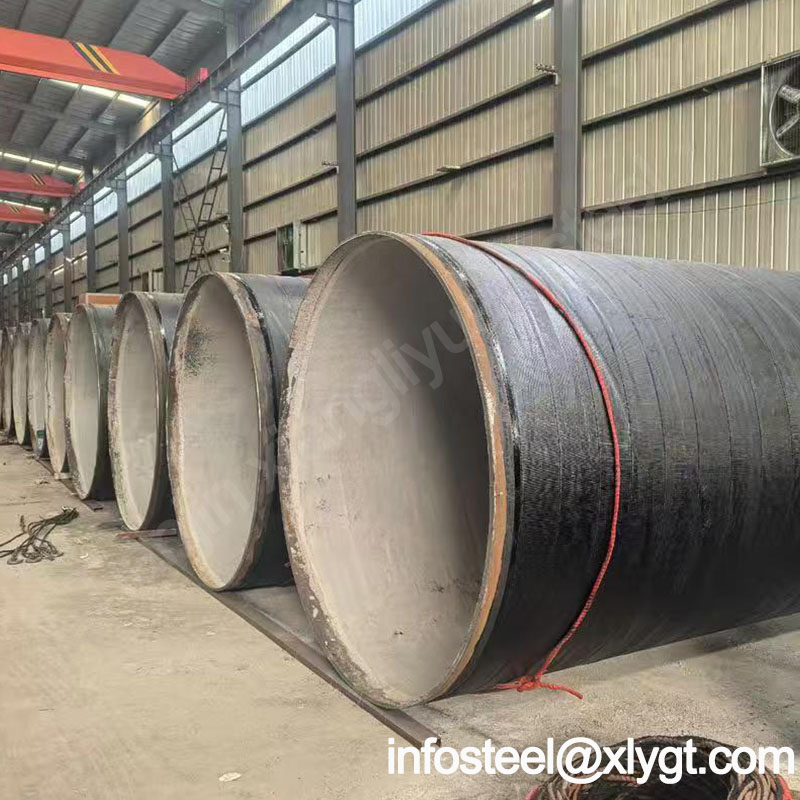
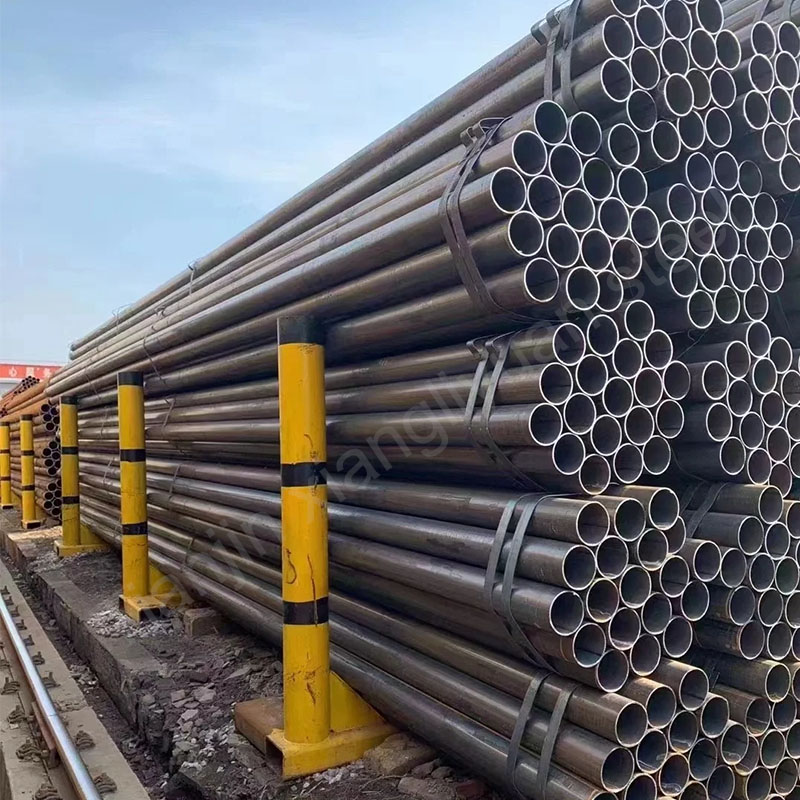
The previous articles have illuminated the world of standard and specialized carbon steel pipes. However, certain industries operate on a different plane—where failure is not an option, and the operating conditions push materials to their absolute limits. The oil and gas sector, along with other critical service applications, requires pipes engineered with precision, verified by rigorous standards, and built to survive in the world’s most challenging environments.
At Tianjin Xiangliyuan Steel, we understand these stakes. Our production capabilities are honed to manufacture high-specification carbon steel pipes that meet the world’s most demanding standards. This article explores these critical-service pipes, focusing on line pipe, OCTG, and other specialized types for severe applications.
1. Line Pipe: The Arteries of Global Energy
Line pipe forms the vast, interconnected network that transports oil, natural gas, and other hydrocarbons across continents and under oceans.
What is it? These are seamless or welded carbon steel pipes manufactured explicitly for pipeline transportation systems. They are governed by the stringent API 5L (American Petroleum Institute) specification, which defines the chemical, mechanical, and dimensional requirements.
Key Characteristics and Grades:
High Strength Grades: API 5L covers a range of grades from common Grade B to high-strength grades like X42, X52, X60, X65, X70, X80, and beyond. The “X” number denotes the minimum yield strength in 1000 psi (e.g., X70 has a 70,000 psi minimum yield strength).
PSL 1 vs. PSL 2: The specification has two Product Specification Levels. PSL 2 imposes stricter requirements for chemical composition, toughness, testing, and inspection, making it mandatory for most critical pipeline projects.
Sour Service Compatibility: Special grades are designed to resist Hydrogen-Induced Cracking (HIC) and Sulfide Stress Cracking (SSC) in environments containing wet H₂S, which is common in sour oil and gas fields.
Common Applications:
Onshore and Offshore Transmission Pipelines
Gathering Lines that collect oil/gas from multiple wells.
Distribution Lines for municipal natural gas.
2. OCTG: The Lifeline of Every Well
OCTG (Oil Country Tubular Goods) is the collective term for the pipes used in drilling and completing oil and gas wells. This category includes three main products:
Drill Pipe: Used to rotate the drill bit and circulate drilling fluid. It must withstand tremendous torque, tension, and internal pressure.
Casing Pipe: Large-diameter pipe run into a drilled well and cemented in place. It prevents the wellbore from collapsing and isolates high-pressure or freshwater zones. Casing is critical for well integrity and is specified under API 5CT.
Tubing Pipe: The conduit through which oil or gas is produced to the surface. It is subject to corrosive fluids, high pressures, and mechanical wear.
3. High-Temperature & Pressure Service Pipes (Beyond A106)
While ASTM A106 is a standard for high-temperature service, even more demanding applications require superior alloys and manufacturing controls.
What is it? These are seamless pipes often made from carbon-molybdenum or low-chromium alloys to enhance strength and resistance to oxidation (scaling) at sustained high temperatures. Standards like ASTM A335 P11, P22, P91 fall into this category, offering enhanced creep strength.
Key Advantages:
Exceptional Creep Resistance: Resists deformation under mechanical stress at high temperatures over long periods.
Oxidation Resistance: The alloying elements form a stable oxide layer that protects the pipe from further degradation.
Common Applications:
Power Plant Piping for main steam lines and hot reheat lines.
Refinery Heater Tubes and transfer lines.
Petrochemical Process Piping in cracking and reforming units.
4. Low-Temperature Service Carbon Steel Pipes
Carbon steel can become brittle at low temperatures. For applications in cold climates or for handling liquefied gases, specialized pipes are essential.
What is it? These pipes are manufactured from fine-grain practice steel and often normalized to ensure high impact toughness (measured by Charpy V-Notch tests) at sub-zero temperatures. The key standard is ASTM A333, which covers seamless and welded steel pipe for low-temperature service.
Key Grades:
Grade 1: For service down to -50°F (-45°C).
Grade 6: For service down to -50°F (-45°C), with different chemistry.
Grade 3 & 7: For even lower temperatures.
Common Applications:
Skid Mounted Plants for gas processing in arctic regions.
Piping for LNG (Liquefied Natural Gas) facilities, where temperatures can reach -260°F (-162°C).
Refrigeration Systems and cryogenic storage.
5. Heavy Wall and Thick-Wall Pipe (HWP/TWP)
When standard schedules (SCH 40, SCH 80) are not enough, heavy wall pipes provide the solution for extreme pressure and mechanical load.
What is it? These are pipes with a wall thickness significantly greater than standard weight pipes. They are characterized by a high OD-to-Wall Thickness ratio, making them incredibly robust.
Key Advantages:
Superior Pressure Containment: Withstands extremely high internal and external pressures.
Enhanced Structural Strength: Resists bending and crushing forces.
Common Applications:
Manifolds in oil and gas production.
Process Piping in high-pressure hydraulic systems.
Scaffolding Pins and heavy-duty structural components.
Cylinders and Accumulators.
Why Tianjin Xiangliyuan Steel is Your Partner for Critical Service Pipes
Manufacturing pipes for these applications is a testament to a mill’s technological capability and quality assurance system.
Full Compliance with International Standards: We are well-versed in API 5L, API 5CT, ASTM A333, ASTM A335, and other critical standards. Our processes are designed to meet both PSL 1 and PSL 2 requirements.
Advanced Non-Destructive Testing (NDT): We employ a full suite of NDT methods, including Ultrasonic Testing (UT) for seam and body defects, Radiographic Testing (RT) for weld integrity, and Eddy Current Testing. For OCTG and line pipe, we perform rigorous Hydrostatic Testing to prove pressure integrity.
Commitment to Traceability: Every length of pipe for critical service is fully traceable from raw material to final product. We provide comprehensive Mill Test Certificates (MTC) that include chemical analysis, mechanical properties, and results of all NDT and hydrostatic tests.
Technical Collaboration: Our engineering team can help you select the most cost-effective grade and specification for your specific service environment, whether you’re dealing with high pressure, low temperature, or sour service.
Specify with Confidence for Your Most Demanding Projects
The margin for error in the oil, gas, and critical service industries is zero. The choice of pipe can determine the safety, longevity, and profitability of a multi-million dollar project.
By partnering with Tianjin Xiangliyuan Steel, you gain access to a reliable source of high-integrity carbon steel pipes, backed by rigorous testing and deep technical expertise. Let us help you build with confidence, even in the most extreme conditions.
For your next critical project, do not hesitate to contact us. Request a quote for API 5L Line Pipe, ASTM A333 Low-Temperature Pipe, Heavy Wall Pipe, or other specialized products, and experience our commitment to excellence.