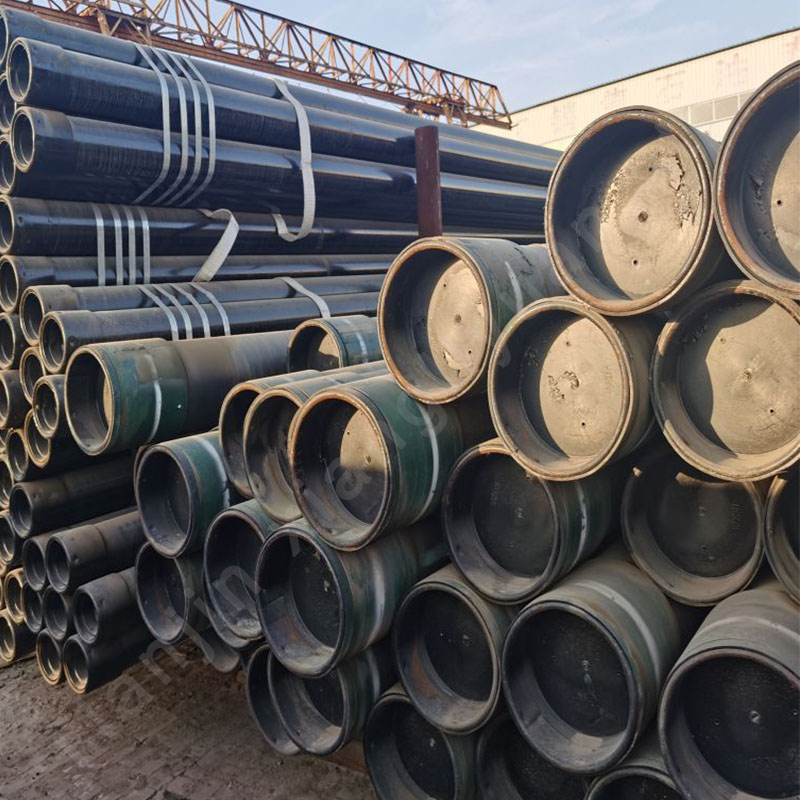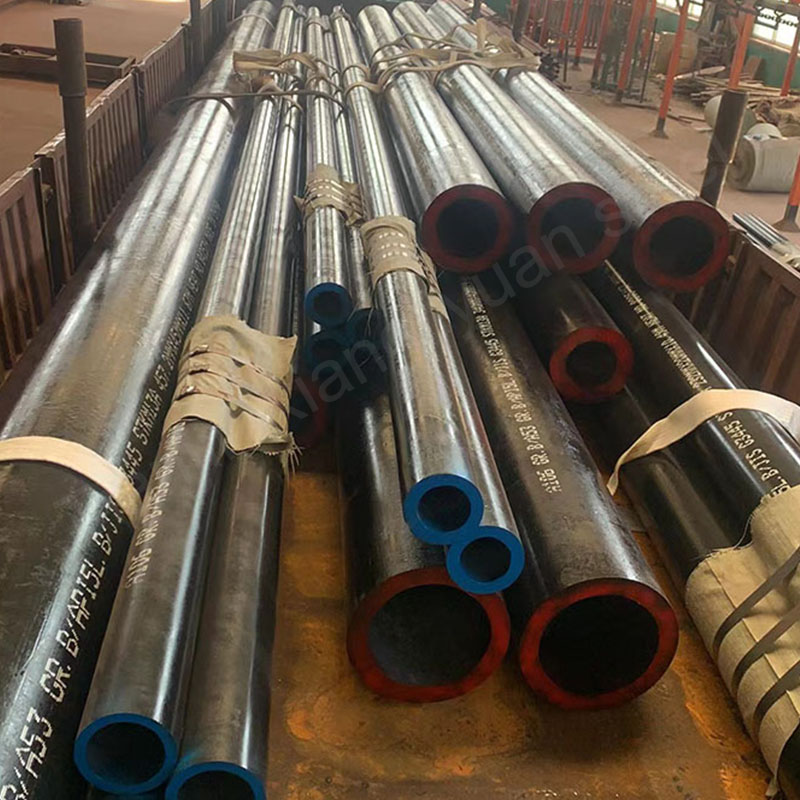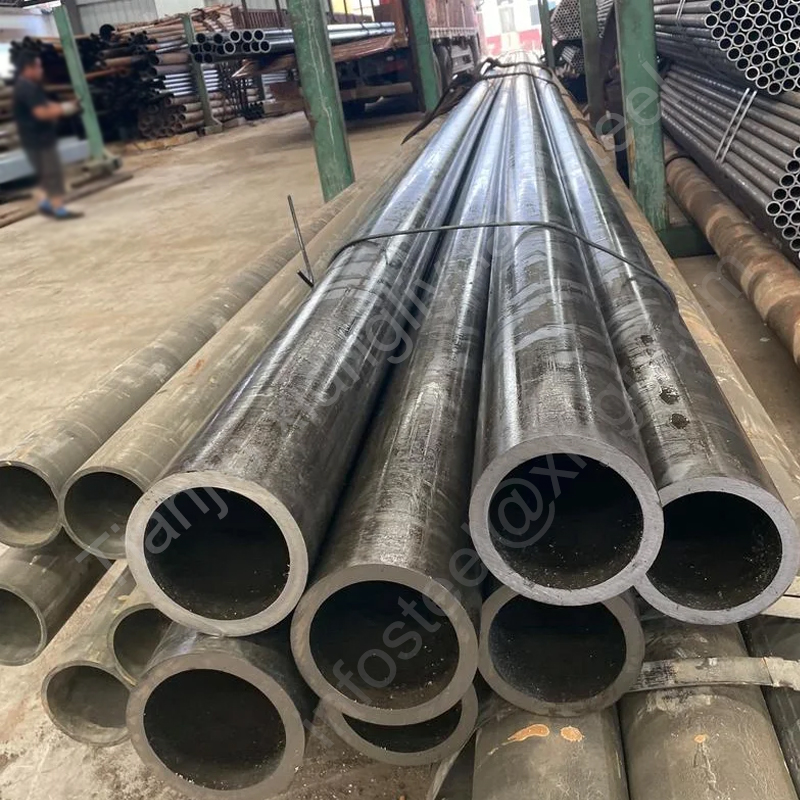
In the demanding world of power generation, petrochemical processing, and high-temperature industrial systems, the integrity of every component is paramount. Among these critical components, piping systems bear the relentless burden of extreme heat, immense pressure, and corrosive environments. Selecting the correct material is not just an engineering decision; it’s a commitment to safety, efficiency, and longevity. This is where 10CrMo910 alloy steel pipe stands out as a premier choice.
As a leading Chinese manufacturer of seamless and welded steel pipes, we specialize in producing high-grade alloy pipes like 10CrMo910, engineered to meet the most rigorous international standards. This article serves as a detailed technical guide to 10CrMo910 steel pipe, covering its composition, properties, applications, and the advanced manufacturing processes that ensure its superior performance.
1. What is 10CrMo910 Steel Pipe?
10CrMo910 (also commonly designated as P22 or 1.7380 according to DIN/EN and ASTM standards) is a low-alloy heat-resistant steel containing chromium (Cr), molybdenum (Mo), and other elements. Its name, derived from the German standard, indicates its approximate chemical composition: 10 stands for 1% Chromium, 9 for 0.9% Molybdenum, and 10 for the carbon content in hundredths of a percent (0.10% max). This specific alloying recipe grants it exceptional strength and stability at elevated temperatures, typically in the range of 500°C to 600°C (932°F to 1112°F).
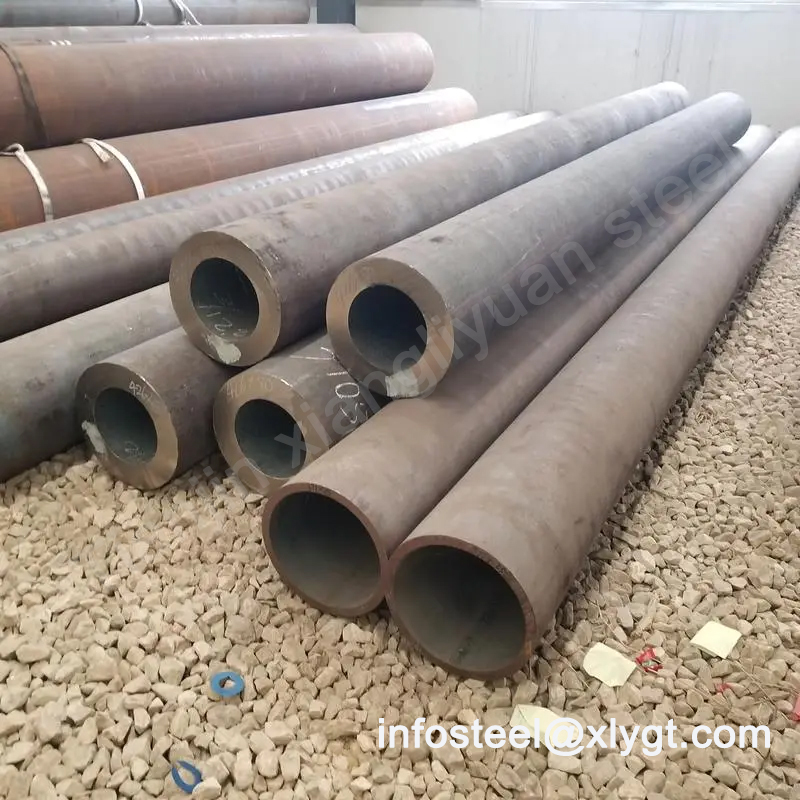
These pipes are primarily produced as seamless steel pipes through processes like hot extrusion or piercing, ensuring a homogeneous structure without a welded seam, which is crucial for high-pressure integrity. They can also be manufactured as longitudinally welded pipes for certain applications.
2. Key Chemical Composition and Mechanical Properties
The performance of 10CrMo910 stems from its precise chemical makeup:
Carbon (C): Up to 0.15% – Provides fundamental strength.
Chromium (Cr): 2.0% – 2.5% – Enhances oxidation (scaling) resistance and high-temperature strength. It forms a stable, protective chromium oxide layer on the surface.
Molybdenum (Mo): 0.9% – 1.1% – Significantly increases high-temperature creep strength (resistance to deformation under constant stress and temperature) and improves toughness.
Manganese (Mn), Silicon (Si): Added for deoxidation and solid solution strengthening.
Low levels of Phosphorus (P) and Sulfur (S): Kept to a minimum to ensure good weldability and toughness.
Typical Room-Temperature Mechanical Properties (after normalization & tempering):
Tensile Strength: 450 – 600 MPa
Yield Strength (Rp0.2): Min. 280 – 300 MPa
Elongation: Min. 20%
Impact Toughness: Excellent, even at sub-zero temperatures, which is vital for plant startups and shutdowns.
Its true superiority, however, is revealed at high temperatures, where it maintains a significant portion of its yield strength and exhibits excellent resistance to creep and thermal fatigue.
3. Primary Applications of 10CrMo910 Pipes
Due to its robust high-temperature properties, 10CrMo910 is the material of choice for critical pressure parts in:
Power Plants (Fossil Fuel & Biomass): Superheater and reheater tubes, high-temperature steam headers, main steam lines, and connecting pipes in boilers. It reliably handles superheated steam at temperatures up to 580°C.
Petrochemical & Refining Industries: Transfer lines for hot oils and gasses, catalytic cracking units, and refinery heater tubes where temperatures and pressures are extreme.
Heat Exchangers & Pressure Vessels: For services involving high-temperature gases or fluids.
General High-Temperature Piping Systems in various industrial processes.
4. Manufacturing Process and Quality Control
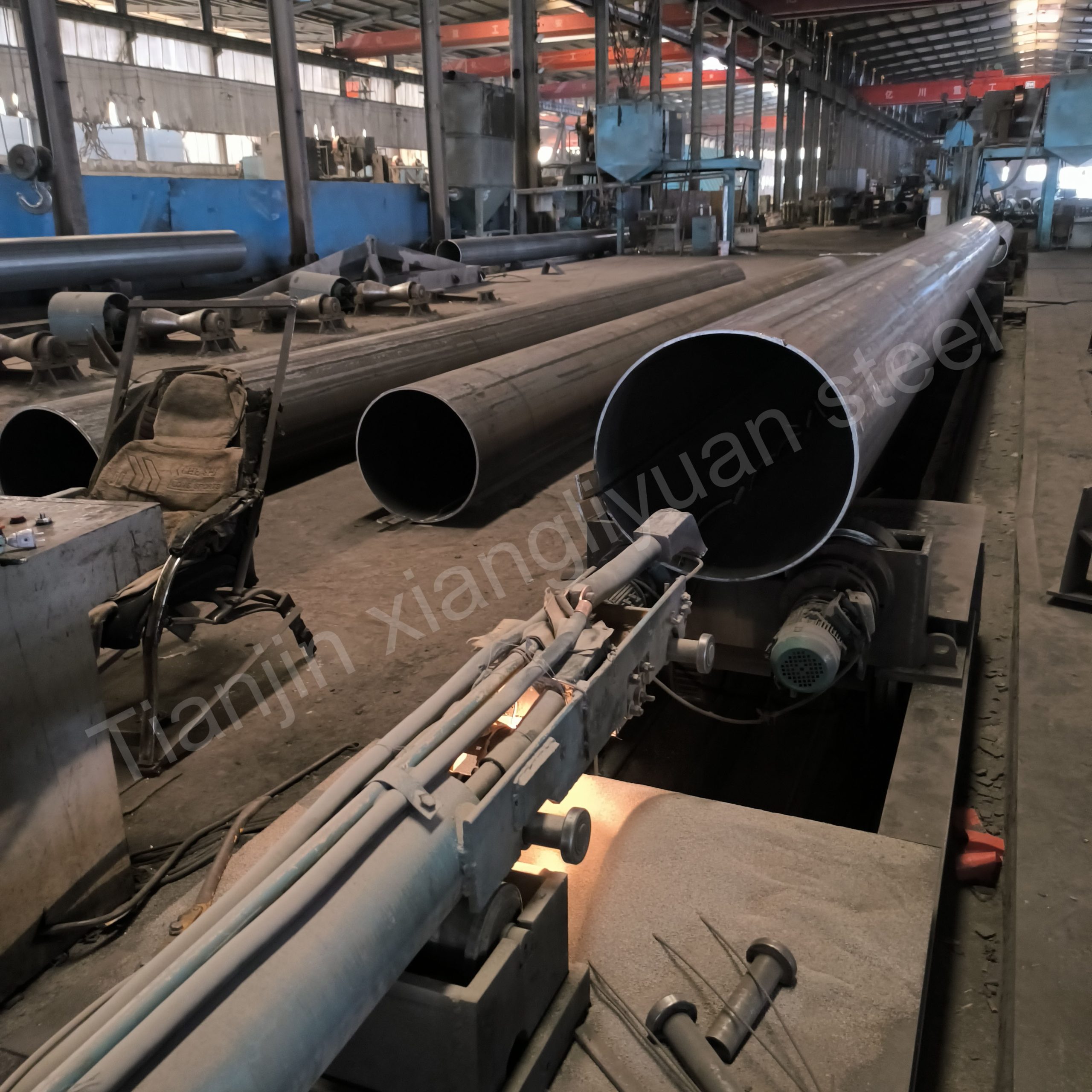
At Tianjin xiangliyuan steel, we employ state-of-the-art manufacturing and stringent quality control to produce 10CrMo910 pipes that consistently exceed expectations.
Our manufacturing process typically involves:
Material Selection & Preparation: Premium-grade steel billets are sourced and rigorously inspected.
Pipe Formation (Seamless): Billets are heated and formed using either a rotary piercing mill (Mannesmann process) or an extrusion press to create a seamless hollow shell (bloom).
Hot Rolling & Sizing: The bloom is further elongated and rolled to the required outer diameter and wall thickness under precise temperature control.
Heat Treatment: This is a critical step. Pipes undergo normalizing (austenitizing followed by air cooling) and tempering. This specific thermal cycle refines the grain structure, optimizes the carbide distribution (of chromium and molybdenum), and achieves the perfect balance of strength, ductility, and toughness. Precise control of tempering temperature is essential to avoid temper embrittlement.
Finishing & Testing: Pipes are straightened, cut to length, and subjected to a comprehensive battery of tests.
Our Uncompromising Quality Assurance includes:
Chemical Analysis: Spectrometry to verify composition.
Mechanical Testing: Tensile, yield, elongation, and Charpy V-notch impact tests.
Non-Destructive Testing (NDT): 100% Ultrasonic Testing (UT) and/or Eddy Current Testing (ECT) to detect internal and surface flaws. For critical applications, we perform Hydrostatic Testing to prove pressure integrity.
Dimensional & Visual Inspection: Ensuring strict adherence to tolerances on OD, WT, and straightness.
Hardness Testing: Across the pipe body to confirm uniform heat treatment.
Certification: We provide full Material Test Certificates 3.1 or 3.2 according to EN 10204, traceable to each production batch.
5. Advantages of Sourcing 10CrMo910 Pipes from Tianjin xiangliyuan steel
Choosing us as your alloy steel pipe supplier offers distinct benefits:
Deep Technical Expertise: We understand the metallurgy and application demands of 10CrMo910.
Advanced Manufacturing Facilities: Our mills are equipped to handle the precise heat treatment required for this grade.
Full Compliance: Our pipes conform to ASTM A335 P22, EN 10216-2, DIN 17175, and other major international standards, as well as customer-specific specifications.
Competitive Pricing: As a leading manufacturer in China, we offer exceptional value without compromising quality, thanks to integrated production and economies of scale.
Global Logistics Support: We have extensive experience in packaging, documentation, and shipping to ports worldwide, ensuring your order arrives safely and on time.
Customization: We can supply pipes in a wide range of sizes (OD and WT), lengths, and with specific end finishes (beveled, threaded, etc.) as per project requirements.
6. Welding and Fabrication of 10CrMo910 Pipes
Successful installation requires proper welding. 10CrMo910 has good weldability but requires pre-heating (typically 200-250°C) and post-weld heat treatment (PWHT) in the range of 650-700°C to relieve residual stresses and restore the heat-affected zone’s microstructure. We recommend using matching electrodes or filler wires (e.g., AWS E9018-B3) and strictly adhering to qualified welding procedures (WPS). As a value-added service, we can provide detailed welding procedure guidelines and even supply matching welding consumables.
7. Frequently Asked Questions (FAQs)
Q1: What is the difference between 10CrMo910, P22, and 1.7380?
A: They are essentially the same material. 10CrMo910 is the traditional German designation (DIN), P22 is the ASTM/ASME code designation (A335 P22 for pipe, A387 P22 for plate), and 1.7380 is the modern EN number.
Q2: What is the maximum service temperature for 10CrMo910 pipes?
A: For long-term continuous service, the maximum recommended temperature is around 580°C (1076°F). For short-term excursions, it can withstand up to approximately 600°C.
Q3: Why is the heat treatment process so important for this steel?
A: Proper normalizing and tempering are essential to develop the specific tempered martensitic/bainitic microstructure that gives 10CrMo910 its optimal combination of high-temperature strength, creep resistance, and toughness. Improper heat treatment can lead to premature failure.
Q4: Can you supply 10CrMo910 pipes with special coatings or protections?
A: Yes. We can apply protective coatings (e.g., anti-corrosion paint, varnish) or end caps as per customer request to prevent damage during transit and storage.
Conclusion: Your Trusted Partner for High-Performance Alloy Pipes
In summary, 10CrMo910 alloy steel pipe is an engineering workhorse for high-temperature, high-pressure applications. Its reliability is non-negotiable. At Tianjin xiangliyuan steel, we fuse advanced metallurgical knowledge with precision manufacturing to deliver 10CrMo910 pipes that form the robust backbone of your most critical systems.
We are more than just a supplier; we are a technical partner committed to supporting your projects from specification to installation. Explore our product range, request a quote, or contact our technical sales team today to discuss how our high-quality 10CrMo910 seamless and welded pipes can meet your specific project needs.
Contact us now for a competitive quotation and detailed technical data sheets.