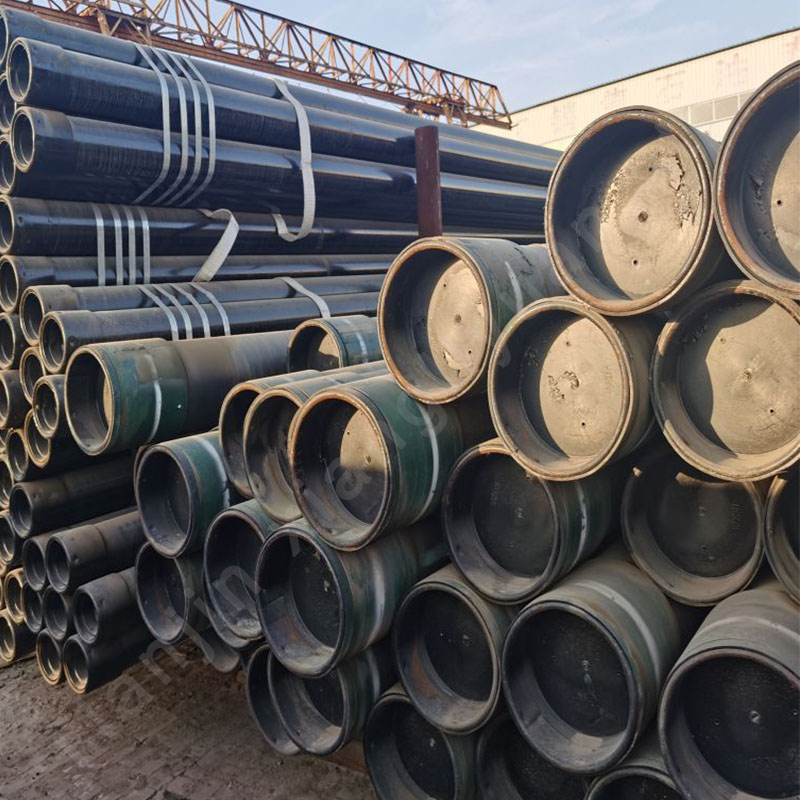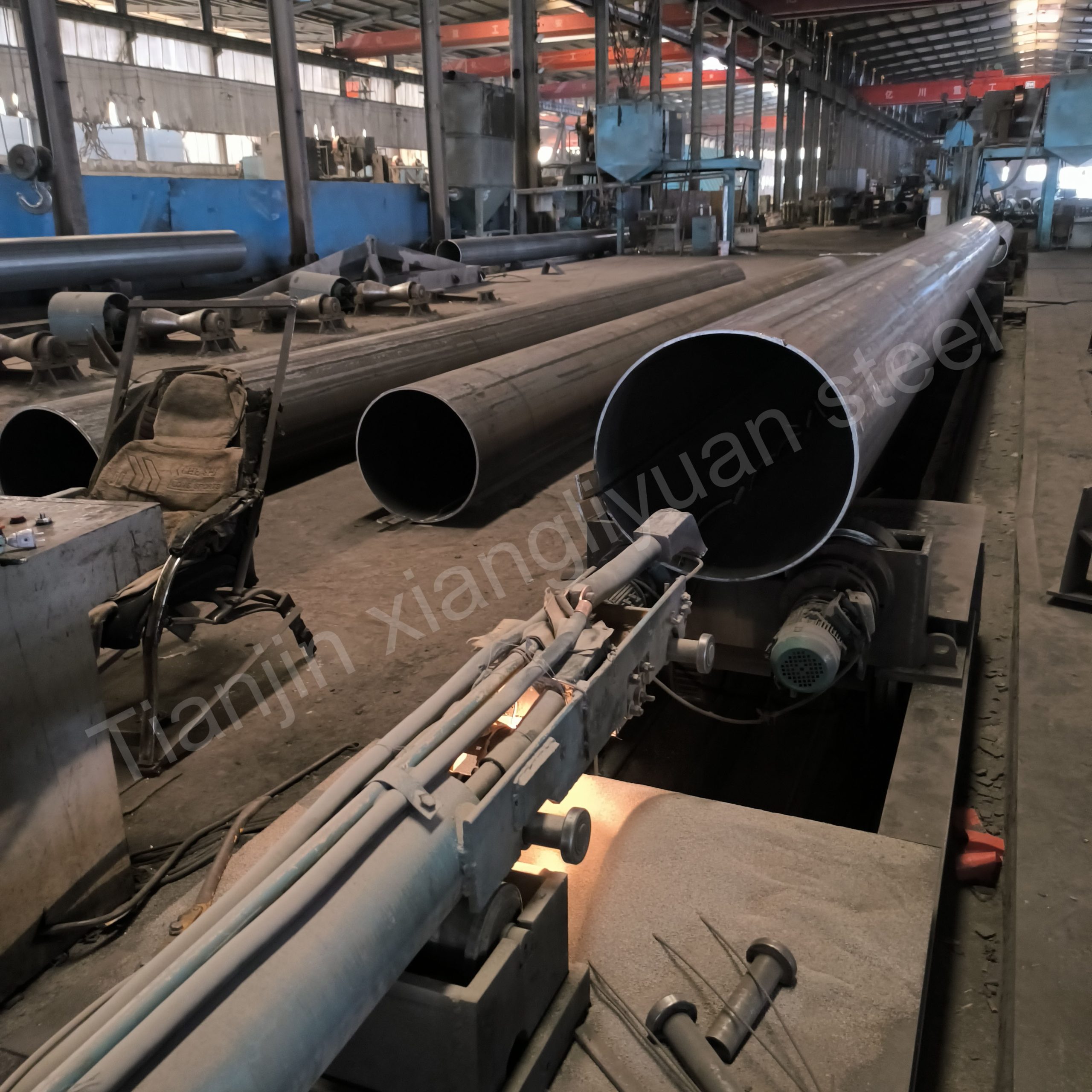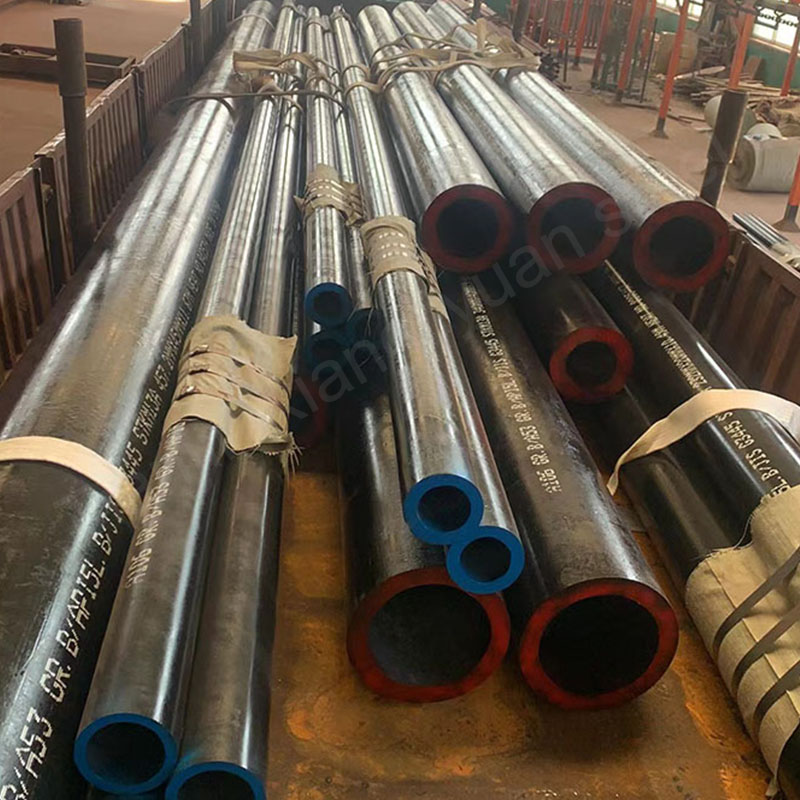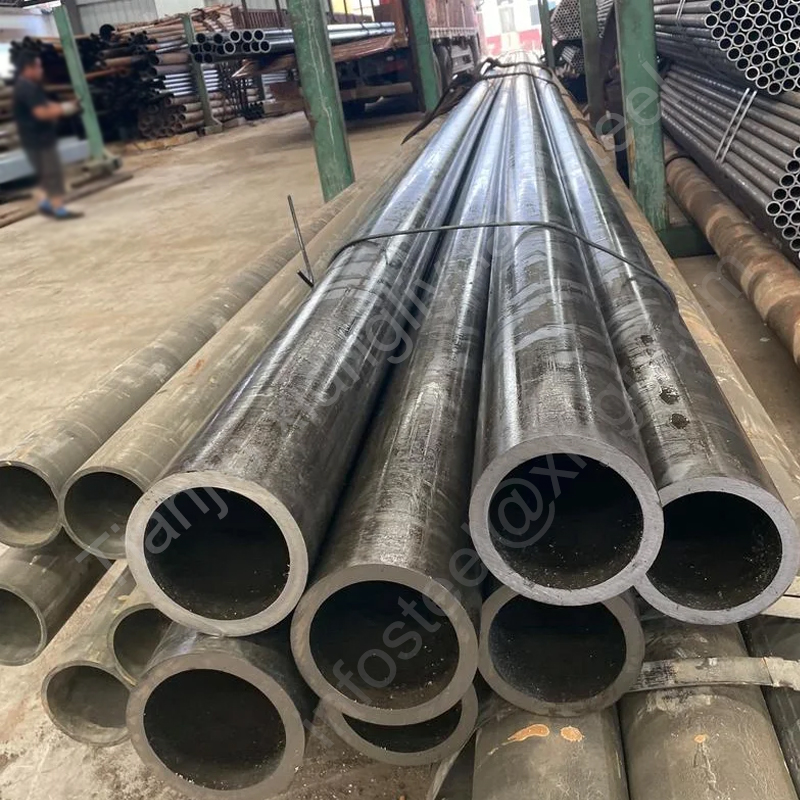
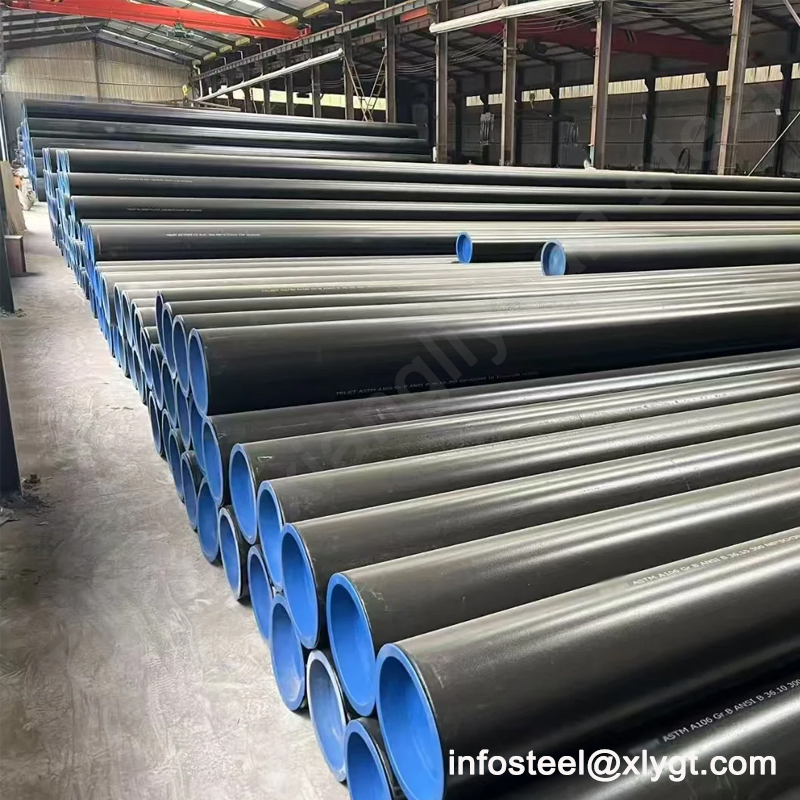
As a premier Chinese manufacturer specializing in high-performance steel pipes for demanding industrial applications, we recognize that material selection is critical for operational safety and longevity. Among our specialized product offerings, API 5L L245NS steel pipe stands out as a purpose-engineered grade designed to withstand the severe challenges of sour service environments containing hydrogen sulfide (H₂S). This comprehensive technical guide details the specifications, properties, stringent manufacturing controls, and targeted applications of L245NS pipe, demonstrating our commitment to providing safe, reliable, and compliant solutions for the global energy sector.
1. Introduction to API 5L L245NS: The “Sour Service” Grade
L245NS is a dedicated grade within the API 5L (American Petroleum Institute Specification 5L) standard for line pipe, with the suffix “S” explicitly denoting its suitability for Sour Service. The “N” indicates it is supplied to Product Specification Level 2 (PSL 2), which mandates enhanced quality and testing requirements.
Nomenclature Breakdown:
L: Line Pipe.
245: Minimum Yield Strength of 245 MPa.
N: PSL 2 Delivery Condition.
S: Sour Service.
This grade is engineered with strict controls on chemistry, microstructure, and hardness to resist the primary failure mechanisms in sour environments: Hydrogen-Induced Cracking (HIC) and Sulfide Stress Cracking (SSC). It is a fundamental material for constructing safe and durable pipelines and piping systems in oil and gas fields where H₂S is present.
Key Governing Standards:
Primary Standard: API 5L L245NS (PSL 2).
Sour Service Testing Standards: Typically evaluated per NACE TM0284 (Solution A, B, or C) for HIC resistance and NACE TM0177 (Method A, B, or D) for SSC resistance.
Equivalent Grades: ISO 3183 L245NS or P245NS, GB/T 9711 L245NS. It is the sour service counterpart to the standard L245M grade.
2. Chemical Composition: The Foundation of Corrosion Resistance
The chemical composition of L245NS is tightly controlled, with specific limitations on elements that can promote HIC and SSC, while promoting a clean, homogeneous microstructure.
Typical Chemical Composition (% by weight, with stringent maximums for sour service):
Carbon (C): ≤ 0.16% (Lower carbon improves weldability and reduces hardness)
Manganese (Mn): ≤ 1.20% (Often further restricted, e.g., ≤1.00%, to minimize centerline segregation)
Phosphorus (P): ≤ 0.020% (Very low to enhance toughness and reduce segregation)
Sulfur (S): ≤ 0.005% (Extremely low to minimize MnS inclusions, which are initiation sites for HIC)
Silicon (Si): ≤ 0.40%
Key Controls for Sour Service:
Calcium (Ca) Treatment: Often used for inclusion shape control to further improve HIC resistance.
Carbon Equivalent (CE/Pcm): Strictly limited to ensure excellent weldability without excessive hardness in the Heat-Affected Zone (HAZ), which is critical for SSC resistance.
Restrictions on Residual Elements: Limits on elements like Cu, Ni, Cr, Mo, and V may be specified by the purchaser to control hardenability and microstructure.
3. Mechanical Properties & Sour Service-Specific Testing
While L245NS maintains the standard strength profile of its grade, its true value lies in its verified resistance to sour service degradation mechanisms.
Standard Mechanical Properties (API 5L PSL 2):
Minimum Yield Strength: 245 MPa (35,500 psi)
Tensile Strength Range: 415 – 760 MPa
Yield-to-Tensile Ratio: ≤ 0.93
Hardness: Strictly controlled. Maximum hardness is typically limited to 250 HV10 (or 22 HRC) for parent material, weld, and HAZ as per NACE MR0175/ISO 15156 requirements to prevent SSC.
Charpy V-Notch Toughness: Mandatory impact testing ensures adequate toughness at low temperatures, a standard PSL 2 requirement.
Mandatory Sour Service Qualification Testing:
Hydrogen-Induced Cracking (HIC) Test (NACE TM0284): Pipe samples are exposed to a saturated H₂S solution for 96 hours. Post-test evaluation quantifies:
Crack Length Ratio (CLR)
Crack Thickness Ratio (CTR)
Crack Sensitivity Ratio (CSR)
Acceptance criteria (e.g., CLR ≤ 10%, CTR ≤ 3%, CSR ≤ 1.5%) are strictly defined in the purchase order.
Sulfide Stress Cracking (SSC) Test (NACE TM0177 Method A or D): Tensile specimens are subjected to a constant load (typically 80-90% of Actual Yield Strength) in an H₂S-saturated environment. The material must withstand the test for 720 hours without failure.
Hardness Survey: Comprehensive hardness testing (Vickers) across the pipe body, weld seam, and HAZ to verify compliance with NACE maximum limits (e.g., ≤ 250 HV10).
4. Specialized Manufacturing Process & Quality Assurance
Producing L245NS requires a “clean steel” practice and rigorous process control throughout manufacturing.
1. Advanced Steelmaking:
Primary Refining: Electric Arc Furnace (EAF) or Basic Oxygen Furnace (BOF) with tight control over raw materials.
Secondary Refining: Essential steps include Ladle Furnace (LF) treatment for precise temperature and chemistry adjustment, and Ruhrstahl-Heraeus (RH) or Vacuum Degassing to drastically reduce hydrogen and oxygen content.
Inclusion Shape Control: Calcium wire injection is used to modify the morphology of sulfide inclusions from elongated, harmful shapes to harmless, globular forms.
2. Pipe Forming (Seamless or Welded):
Seamless (SMLS): Offers inherent homogeneity without a weld seam, often preferred for critical sour service.
Welded (HF-ERW or SAW): For welded pipe, the welding process and consumables must be qualified for sour service. Post-weld heat treatment (PWHT) is almost always required to soften the HAZ and achieve uniform, low hardness.
3. Stringent Quality Control & Documentation:
Enhanced NDT: 100% automated ultrasonic testing (UT) of the pipe body and weld seam, with superior sensitivity to detect inclusions and laminations.
Batch-wise Destructive Testing: Full suite of mechanical tests plus mandatory HIC/SSC test reports from an accredited laboratory.
Traceability: We provide a comprehensive Sour Service Mill Test Certificate, including all chemical analyses, mechanical tests, HIC/SSC test reports, and hardness surveys, ensuring full compliance with API, NACE, and project-specific requirements.
5. Primary Applications of L245NS Steel Pipe
L245NS is exclusively specified for environments where H₂S contamination is known or suspected.
Sour Oil & Gas Field Gathering Systems: Transporting unprocessed wellstream fluids containing H₂S and CO₂ from wellheads to processing plants.
Sour Gas Injection/Disposal Lines: Pipelines for re-injecting produced sour gas or transporting it to disposal wells.
Process Piping in Sour Service Plants: Within gas sweetening (amine) units, sulfur recovery units (Claus plants), and associated facilities.
Offshore Sour Service Flowlines: Subsea pipelines transporting sour production from offshore platforms.
6. Key Advantages and Selection Rationale
Engineered for Safety: Specifically designed to prevent catastrophic failures (HIC/SSC) in the presence of H₂S, protecting personnel, assets, and the environment.
Regulatory Compliance: Ensures projects meet the stringent material requirements of international standards (NACE MR0175/ISO 15156) and regional regulations for sour service.
Lifecycle Cost-Effectiveness: While the initial cost is higher than standard L245 due to specialized manufacturing and testing, it prevents costly leaks, unplanned shutdowns, and replacements, offering superior long-term value.
Proven Reliability: A well-established material with a long track record of safe performance in some of the world’s most challenging oil and gas fields.
Fabricability: Despite its specialized nature, it maintains good weldability when using qualified procedures and low-hydrogen consumables.
7. Comparison with Standard and Other Sour Grades
vs. L245M / L245N (PSL 1): L245NS has vastly superior and guaranteed resistance to HIC/SSC, achieved through cleaner steel, stricter chemistry, and mandatory qualification testing. Standard grades are not suitable for sour service.
vs. Higher-Strength Sour Grades (e.g., L290NS/X42NS, L360NS/X52NS): L245NS provides adequate strength for many gathering systems with the advantage of typically better SSC resistance due to its lower inherent strength/hardness. Selection is based on design pressure requirements.
8. Why Source L245NS Pipe from Our Facility?
Sour Service Expertise: We possess deep metallurgical and process expertise in manufacturing “clean steel” and meeting the exacting requirements of sour service specifications.
Full Testing Capabilities & Partnerships: We conduct in-house hardness and comprehensive mechanical testing and partner with accredited international laboratories for formal HIC/SSC testing, providing fully certified packages.
Welding Procedure Qualification: We can develop and qualify welding procedures (WPS/PQR) for L245NS to NACE standards, offering turnkey solutions for fabricators.
Commitment to Integrity: We understand the critical safety implications of sour service materials. Our quality management system is built on a foundation of zero tolerance for deviations in this product category.
Global Project Experience: Our L245NS pipes have been successfully supplied to sour oil and gas projects in the Middle East, Asia, and other regions, demonstrating our global compliance and logistical capabilities.
API 5L L245NS steel pipe is not merely a commodity product; it is a critical safety component for any pipeline or piping system exposed to hydrogen sulfide. Its specialized design, rigorous manufacturing controls, and mandatory performance testing make it an indispensable choice for ensuring integrity in corrosive sour environments. As a dedicated and experienced Chinese manufacturer–Tianjin xiangliyuan steel, we are equipped to deliver L245NS pipes that meet the highest international standards of quality and reliability, supporting the safe and efficient development of global sour energy resources.
For your next sour service pipeline or piping project, partner with a supplier that combines technical expertise with an unwavering commitment to quality. Contact us today for technical consultation, certified test reports, and competitive quotations for API 5L L245NS steel pipe.